Browse the archive

Historic buildings

Historic buildings case files: historic context, historical accounts, sources, and access cautions from the archive.

Goat Canyon Trestle (Carrizo Gorge railway)

⌖ Anza-Borrego Desert / Carrizo Gorge, California

Historic buildingPrivate · no entry

Goat Canyon Trestle is a monumental wooden railway bridge built in the early 1930s to carry trains around a collapsed tunnel in Carrizo Gorge. The San Diego History Center and Los Angeles Times describe it as approximately 630 feet long and 186 feet high, among the largest wooden trestles rather than a securely established world record. Its scale reflects the difficulty of maintaining the railway that connected San Diego with the Imperial Valley through Mexico after completion in 1919. Floods, fires, rockslides and tunnel failures repeatedly interrupted that connection. The trestle’s later story is not simply one of abandonment. MTS acquired the railway in 1979. Its April 2013 fact sheet records an October 2008 freight embargo pending bridge and tunnel repairs. Rehabilitation proposals followed, but Voice of San Diego reported in 2021 that MTS had ended Baja Rail’s lease. Those dated records do not establish present freight operations. This is restricted railway infrastructure, not a public walking bridge. MTS currently requires permission to enter its SD&AE right-of-way. The profile identifies the historical general area only and supplies no approach, crossing or viewing route.

◯ General area onlyOpen case file →

Gaskill Brothers Stone Store, Campo (1875 border raid history)

⌖ Campo, California

Historic buildingOpen to the public

On December 4, 1875, raiders led by Cruz 'Pancho' Lopez attacked the Gaskill brothers' earlier frame store and adjoining blacksmith shop at Campo. Early and later histories describe Luman Gaskill, also spelled Lumen, and his brother Silas being wounded and surviving. Guinn's 1907 biography and later local-history reporting describe a raider identified as Vasquez being killed and two captured raiders subsequently lynched. Published accounts differ about individual names, the sequence of shots and the timing and circumstances of some deaths; these details should not be treated as a settled casualty reconstruction. The gunfight occurred at the earlier frame building, not inside the surviving stone store. The sturdier replacement store dates to 1885 according to County Parks and local museum histories. California's landmark record describes restoration as a museum in 1943–1948 and registration on November 15, 1948. The surviving building now operates as the Campo Stone Store Museum.

◯ General area onlyOpen case file →

Edgemoor Farm Dairy Barn, Santee

⌖ Santee, California

HauntedOpen to the public

Edgemoor's tall, Dutch gambrel-roofed barn preserves a chapter of Santee's agricultural history that later became entwined with county welfare and medical care. Built in 1913 for Walter Dupee's prize dairy breeding bulls, it is commonly called the Polo Barn, although the National Register nomination places the pony stables elsewhere on the farm. The nomination identifies agriculture and architecture as the building's historical significance. [National Register nomination](https://npgallery.nps.gov/GetAsset/6e43be87-2d36-4817-aa9b-7c6f943fd368). San Diego County bought the farm in 1923 for a home serving aged and indigent people. Residents and workers tended its crops and livestock. Farming ended in 1953, and the institution became Edgemoor Geriatric Hospital in 1955; the barn served as storage rather than hospital wards. [SOHO history](https://www.sohosandiego.org/reflections/2008-34/edgemoor.htm); [National Register nomination](https://npgallery.nps.gov/GetAsset/6e43be87-2d36-4817-aa9b-7c6f943fd368). The barn was registered on May 16, 1985, not 1986. Today the Santee Historical Society presents local-history exhibits inside it, with limited opening days rather than unrestricted access. This is a museum in a historic agricultural building, not an abandoned hospital open for exploration. [State register](https://ohp.parks.ca.gov/listedresources/Detail/N1360); [museum operator](https://www.santeehistoricalsociety.org/about-us); [visitor information](https://www.santeehistoricalsociety.org/contact-us).

◯ General area onlyOpen case file →

María Merced Williams & John Rains House (Casa de Rancho Cucamonga)

⌖ Rancho Cucamonga, California

ResidentialOpen to the public

Built in 1860–1861, this brick ranch house preserves a history of hospitality, inherited wealth and contested control of land. María Merced Williams and John Rains moved here from Chino with their children in spring 1861. Bricks made from local red clay formed the walls, while water passing beneath the house helped cool it. The [county museum's history](https://museum.sbcounty.gov/maria-merced-williams-john-rains-house/) describes a home arranged around a patio and a rancho expanding its vineyards. In November 1862, John Rains was murdered while traveling toward Los Angeles near present-day San Dimas—not at this house. The killing remained unsolved. Merced then faced a struggle over her property: [independent historical reporting](https://www.latimes.com/archives/la-xpm-2001-feb-18-me-27083-story.html) describes pressure to surrender control through a power of attorney, followed by a successful court challenge. Debt and foreclosure nevertheless cost her the rancho. Later owners repaired and altered the building, but vacancy and vandalism eventually threatened it. Community preservation efforts helped bring county acquisition in October 1971. Today it operates as a public historic house museum. Its 2022 renaming restored Merced's name to the site's public identity, recognizing her place in a history often told chiefly through her husband's death.

Open case file →

Workman House, Homestead Museum

⌖ City of Industry, California

ResidentialOpen to the public

The Workman House preserves the history of a California rancho family whose fortunes rose with cattle ranching and fell with banking. William Workman began the adobe home in 1842; later remodeling gave it the appearance of an English manor house, according to [California’s landmark record](https://ohp.parks.ca.gov/ListedResources/Detail/874). The house’s story reaches beyond one tragic event to the changing economy of greater Los Angeles. The Temple and Workman bank, co-owned by Workman and his son-in-law F. P. F. Temple, closed permanently on January 13, 1876. Workman died by suicide on May 17. [Museum historian Paul R. Spitzzeri](https://homesteadmuseum.blog/2017/05/17/on-this-day-the-death-of-william-workman-17-may-1876/) reconstructs the event from contemporary newspapers. Their explanations of his motives remain historical interpretations, not certainty about his private thoughts. The property did not simply disappear after the collapse. Family members retained the house and surrounding acreage into the late nineteenth century, and Walter P. Temple bought it in 1917. After later institutional uses, city acquisition and restoration, the Homestead Museum opened in 1981, as the [National Park Service recounts](https://www.nps.gov/places/workman-and-temple-family-homestead-museum.htm). Today it is a public historic museum, not a private residence. The [museum’s current visitor information](https://www.homesteadmuseum.org/) requires guided tours for ordinary house visits.

◯ General area onlyOpen case file →
Keys Ranch (Desert Queen Ranch), Joshua Tree National Park

Keys Ranch (Desert Queen Ranch), Joshua Tree National Park

⌖ Joshua Tree National Park, California

ResidentialOpen to the public

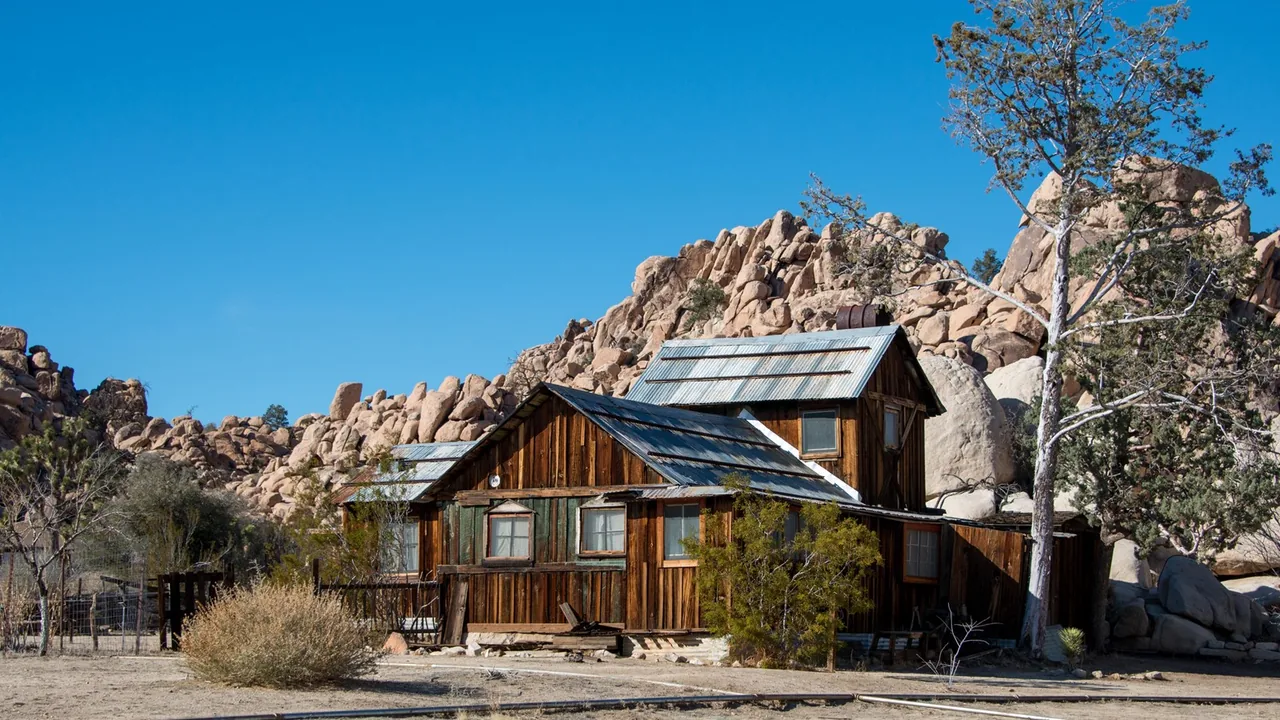
Keys Ranch preserves a family homestead whose history reaches well beyond a famous shooting. Bill Keys filed a homestead claim in 1917; Frances Lawton Keys helped sustain the desert household through gardening, livestock care, preserving food, teaching and selling goods. Mining and ranching were only part of the work that made this isolated place viable. The National Park Service's history gives Frances a central role in that achievement. [Frances Lawton Keys, NPS](https://www.nps.gov/articles/000/frances-lawton-keys.htm) On May 11, 1943, Bill Keys shot and killed Worth Bagley during a longstanding dispute. Keys said he acted in self-defense; a jury convicted him of manslaughter. He received a ten-year sentence, was paroled in 1948 and returned to the ranch. Accounts agree that he later received a pardon but differ on its year. The killing should not overshadow the family's decades of work here. [Advocate, 2022](https://www.advocatemagazine.com/issues/2022-august/summer-in-the-high-desert-joshua-tree) Today the ranch is a protected historic site in Joshua Tree National Park. Admission is limited to reserved ranger-led tours, not independent exploration. Its value is documented history; this profile makes no supernatural claim. [NPS ranch tours](https://www.nps.gov/jotr/planyourvisit/ranchtour.htm)

◯ General area onlyOpen case file →

Image credits

California Theatre (San Diego)

California Theatre (San Diego)

⌖ San Diego, California

Historic buildingStatus unconfirmed

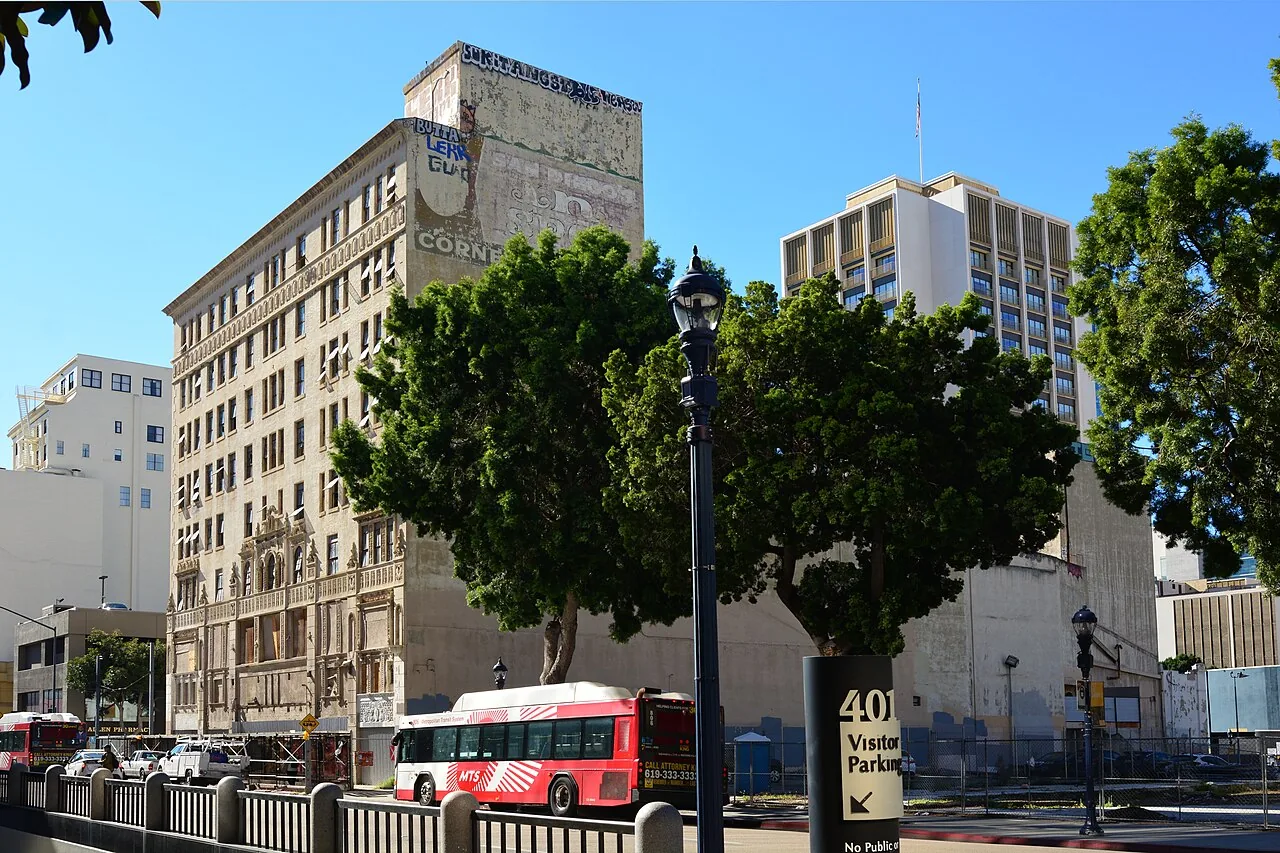
The New California Theatre opened in San Diego on April 22, 1927, with a silent film, stage entertainment and a band. The 2,200-seat Spanish Colonial Revival movie palace had gold-leaf ceilings, murals and a Wurlitzer organ, while the building also housed shops and offices. Its name distinguished it from an older California Theatre, renamed the Aztec in 1930. In the 1970s, the California became a concert venue; regular movie screenings ended in 1976. The Old Globe used the theatre while its own home was rebuilt after the 1978 fire. A renovation followed in 1988, but the theatre closed in 1990 because of structural safety concerns.

◯ General area onlyOpen case file →

Image credits

Franceschi House (Montarioso)

Franceschi House (Montarioso)

⌖ Santa Barbara, California

HauntedStatus unconfirmed

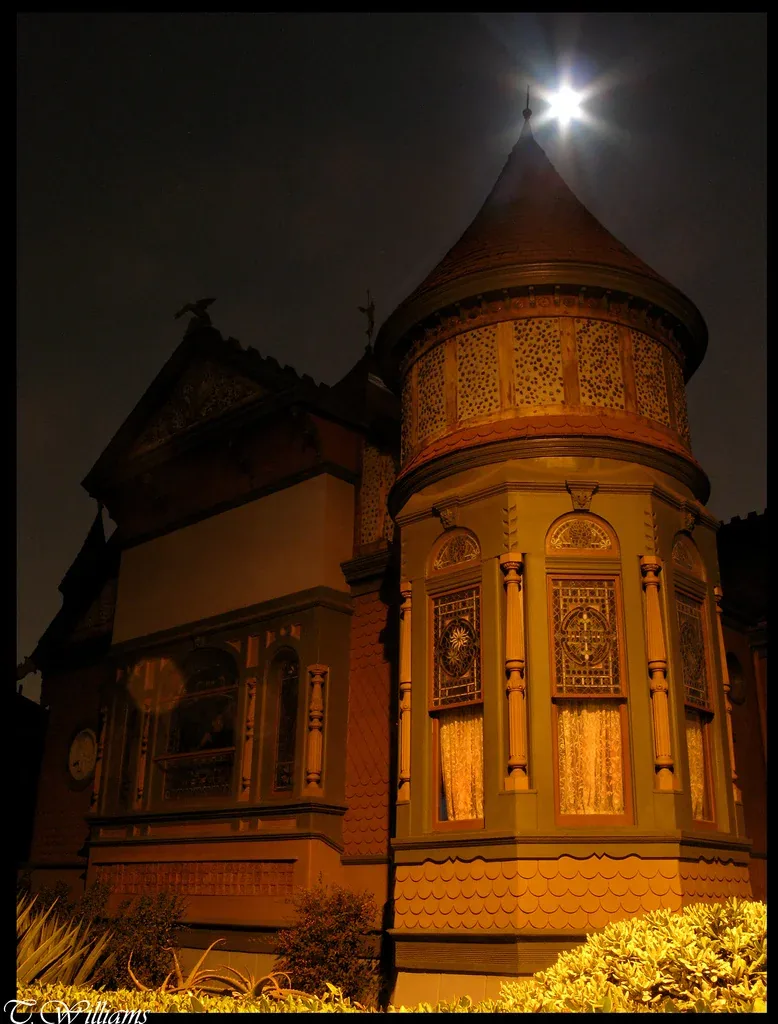
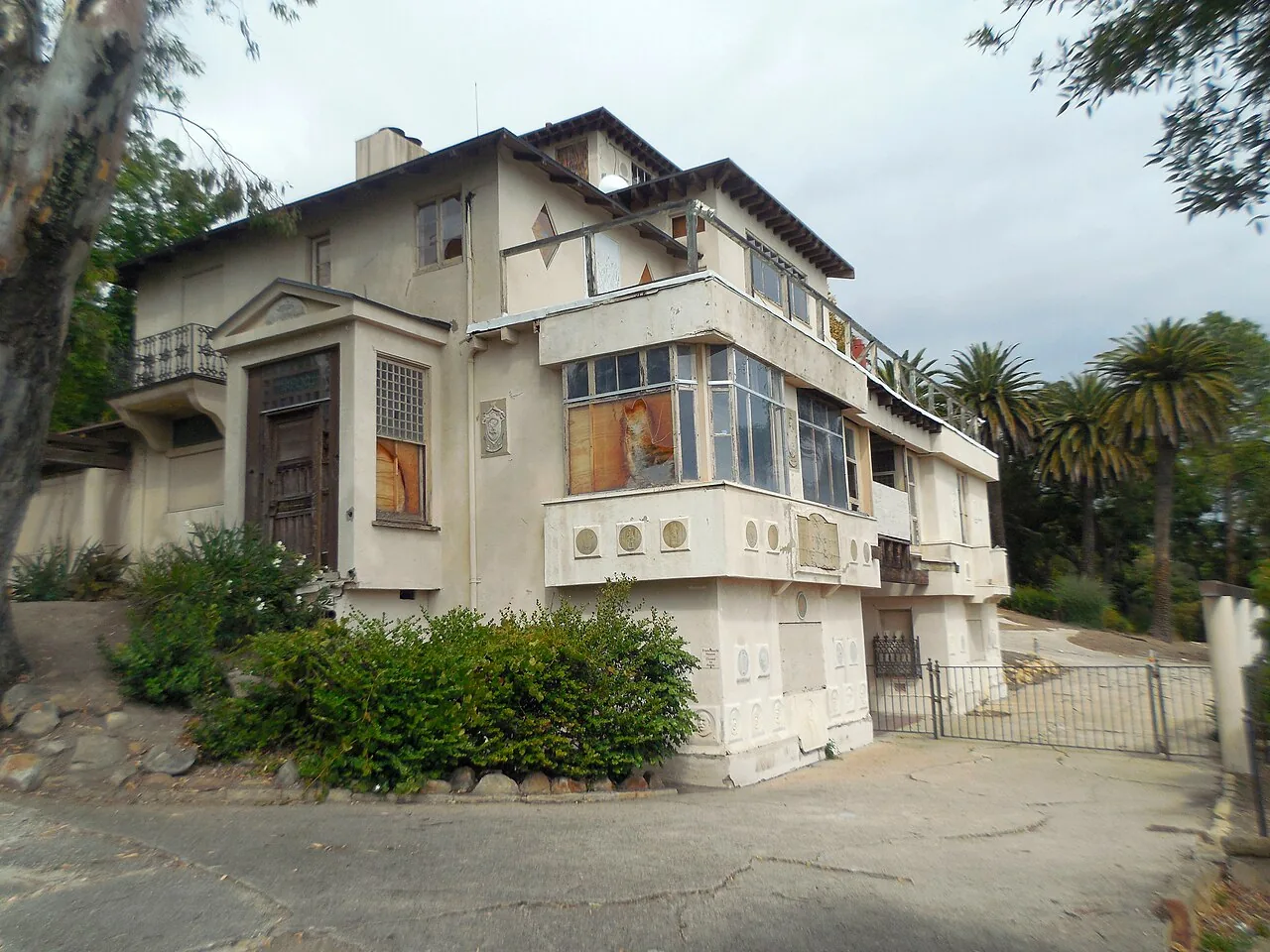
Franceschi House began as a redwood Craftsman home, not a stucco villa. Horticulturist Francesco Franceschi built it in 1905 and named the house and surrounding botanical garden Montarioso. His garden and nursery operated here from 1903 to 1913, helping introduce hundreds of plant species to Southern California. Philanthropist Alden Freeman later transformed the house, covering its redwood siding with stucco and adding 85 plaster medallions. Their subjects included Jane Addams and Mary Wollstonecraft. In 1931, Freeman donated the property to Santa Barbara for public parkland. The house became a place for teaching and music. Peter Riedel’s vocational horticulture program used it for classrooms in 1934; the WPA symphony orchestra used it for offices and rehearsals in 1941. Later deterioration prompted repeated preservation efforts. In 2018, the City Council voted to replace the house with an open-air space honoring its history.

◯ General area onlyOpen case file →

Image credits

Kimble-Wilson adobe store, Warner Ranch

⌖ Warner Springs area, California

Historic buildingStatus unconfirmed

The Kimble-Wilson adobe store served as a wayside stop on Warner Ranch. Cyrus Kimble probably built it in 1862, according to Save Our Heritage Organisation’s history. The adobe is also described as a distinct historic store in the federal nomination for Warner’s Ranch. In 1865, Kimble and George Williams were killed at a Santa Ana River camp while traveling to Wilmington with their wives and babies. Sergeant George Cooke found the men dead and recounted the attack as described by their widows. Henry Wilson took over the store in 1866.

◯ General area onlyOpen case file →

Elsinore Naval and Military School, Lake Elsinore

⌖ Lake Elsinore, California

Historic buildingStatus unconfirmed

Originally planned as a country club, the building became home to Elsinore Naval and Military School. The school opened in 1933 and closed in 1977. By 2012, the former academy was in disrepair. Its owner pledged to maintain the building, with maintenance efforts described in the Press-Enterprise's reporting that year.

◯ General area onlyOpen case file →

Heber College schoolhouse, Imperial Valley Pioneers Museum

⌖ Imperial, California

Historic buildingStatus unconfirmed

By May 1910, Heber Collegiate Institute was nearing the end of its second school year. Its administration building had been completed and occupied that January. A May 21 report in the Imperial Valley Press announced plans for a dedication on May 25. The old Heber schoolhouse served as an agricultural college, a grammar school and a home. A 2013 Imperial Valley Press account reports its relocation to Pioneers' Museum. The museum's history dates the college's closure to 1912 and the school's final closure to 1960, though closure dates differ among accounts.

◯ General area onlyOpen case file →
Add to the archive

Know a story worth telling?

Send a place name, its town, and a credible source link. Please don’t include private addresses, exact locations, or personal details.