Browse the archive

California historic places

Explore source-linked history, landmarks, and historic places in California. Check visiting information with official operators.

Whaley House

Whaley House

⌖ San Diego (Old Town), California

Haunted house & museumOpen to the public

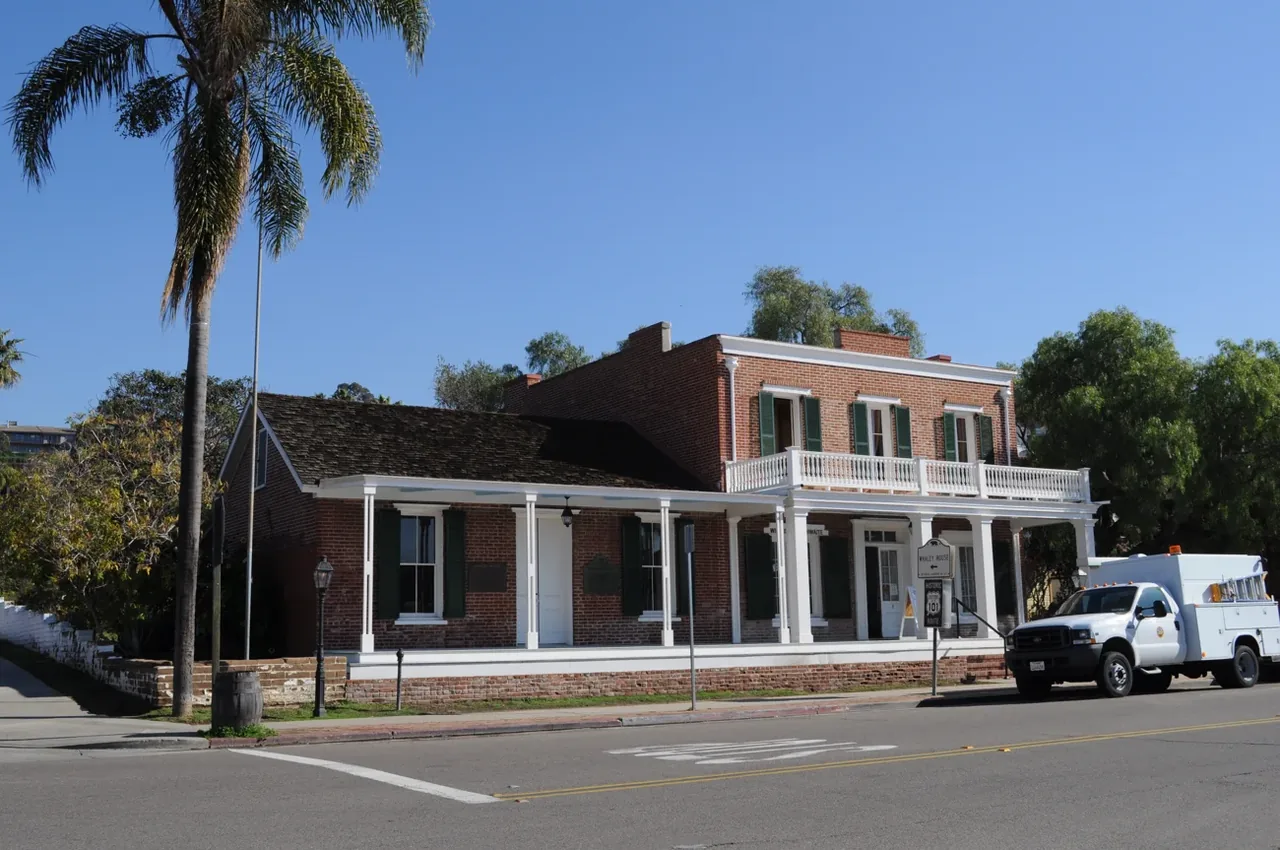
Completed in 1857, the Whaley House brings several chapters of Old Town San Diego into one brick building. Thomas Whaley designed the Greek Revival home and used bricks from his own brickyard. The County of San Diego identifies it as the city's first two-story brick building; it is also California Historical Landmark No. 65. [County history](https://www.sdparks.org/content/sdparks/en/park-pages/WhaleyHouse.html) · [Landmark record](https://ohp.parks.ca.gov/ListedResources/Detail/65) The building was more than a family residence. Its rooms accommodated a general store, San Diego's first commercial theater in 1868, and the county courthouse. Whaley and Philip Crosthwaite opened their store here in 1869. Family loss also belongs to its documented history: Thomas and Anna's infant son died in 1858, and their daughter Violet died in 1885. These events are distinct from the house's later ghost traditions. [SOHO history](https://www.sohosandiego.org/educators/images/lessonspioneerwhaleyfamily.pdf) Frank Whaley returned in 1909 to restore the aging building and show it to visitors. After a preservation campaign, the County purchased the house in 1956; the museum opened in May 1960. Today it remains a county-owned museum offering daytime self-guided visits and reserved evening guided tours. [Preservation history](https://www.sohosandiego.org/educators/images/lessonspioneerwhaleyfamily.pdf) · [Current tickets](https://www.whaleyhousesandiego.com/tickets/)
◯ General area onlyOpen case file →

San Diego - Whaley House 01.jpg — © Joe Mabel, CC BY-SA 3.0. Adaptation under CC BY-SA 3.0. · CC BY-SA 3.0 · Responsive resize; EXIF/GPS removed; cinematic display framing/tone; local derivatives preserve full aspect ratio and do not upscale; original source remains unchanged

Villa Montezuma

Villa Montezuma

⌖ San Diego (Sherman Heights), California

Haunted house & museumOpen to the public

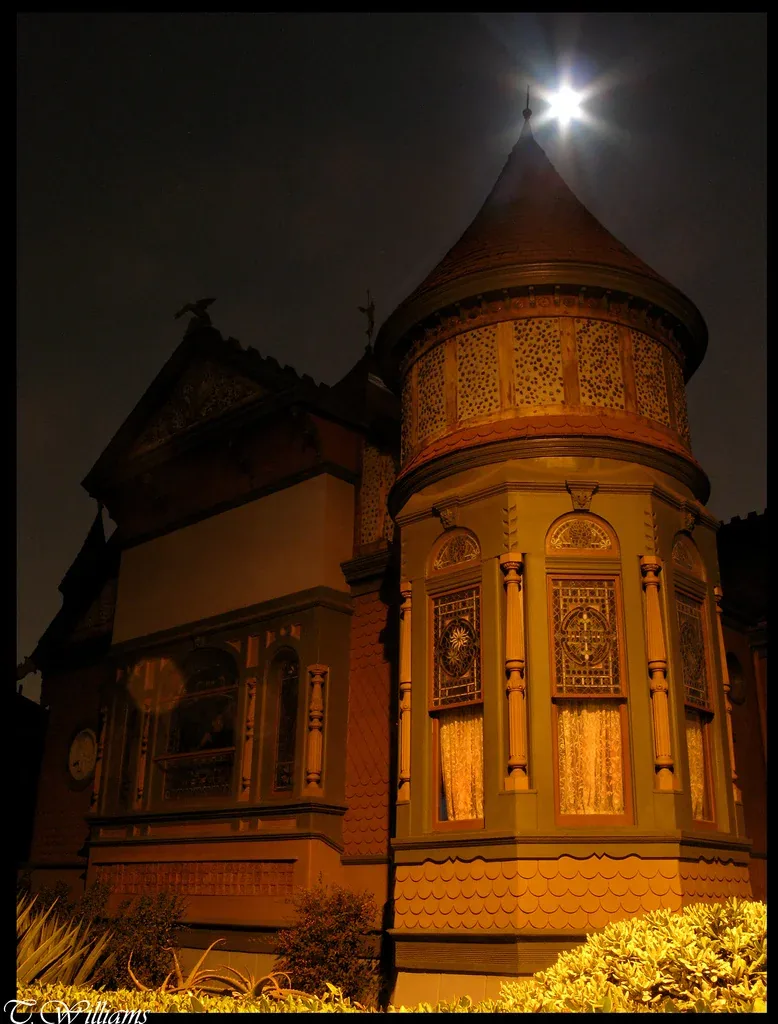
Villa Montezuma is an 1887 Queen Anne house museum in San Diego's Sherman Heights, built for pianist, vocalist and writer Jesse Shepard. Architects Comstock and Trotsche gave the house an elaborate Victorian design, with pictorial and patterned colored glass central to its character. Shepard later wrote under the name Francis Grierson; the [Historic American Buildings Survey](https://www.loc.gov/resource/hhh.ca0614.photos/?st=grid) records both careers and the building's architectural significance. The house was more than a showpiece. Shepard hosted invited musical gatherings and developed his literary career here before selling the Villa in December 1889. Historian [Clare Crane's documented account](https://sandiegohistory.org/journal/1970/july/shepard/) also challenges sensational stories about his patrons and distinguishes his spiritual interests from claims that the house served as a séance business. Preservation efforts saved the building in the 1960s, and it opened as a museum in November 1972. A 1986 fire led to restoration and reopening in 1987. Today the City owns the museum and the Friends of the Villa Montezuma operate it. The [operator's current guidance](https://villamontezumamuseum.org/) confirms guided weekend tours during ongoing restoration, with advance reservations. The grounds are not freely accessible, and interior photography is prohibited.

◯ General area onlyOpen case file →

Villa Montezuma — © Timm Williams, CC BY 2.0 · CC BY 2.0 · Responsive resize; EXIF/GPS removed; cinematic display framing/tone; local derivatives preserve full aspect ratio and do not upscale; original source remains unchanged

Hotel del Coronado (Kate Morgan legend)

Hotel del Coronado (Kate Morgan legend)

⌖ Coronado, California

Historic hotelOpen to the public

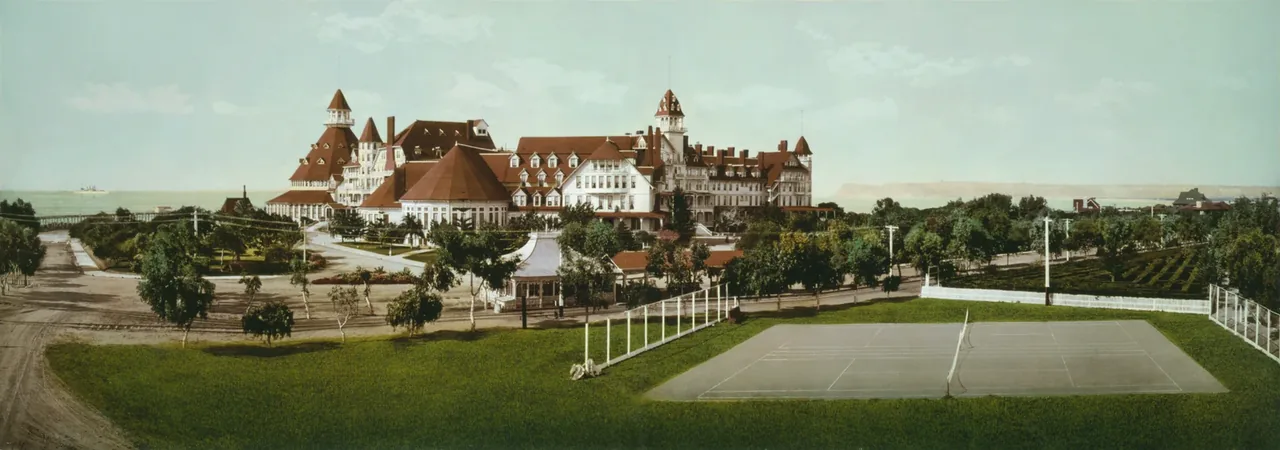
Hotel del Coronado is a surviving Victorian beach resort designed by James and Merritt Reid and completed in 1888. Its wooden Queen Anne architecture has endured successive alterations and restorations. California's Office of Historic Preservation records its state landmark designation in 1970, National Register listing in 1971 and National Historic Landmark designation in 1977. [State history](https://ohp.parks.ca.gov/?page_id=27425). The hotel celebrates February 19, 1888 as its birthday because that was the first meal served in the main dining room; its own history notes that guests had already begun arriving in January. The same account identifies Kate Morgan as the guest who registered under the name Lottie A. Bernard and died at the hotel on November 29, 1892. It reports the county coroner's finding that her fatal injury was self-inflicted. [Hotel history](https://www.hoteldel.com/history/). The building's story is also one of preservation. An extensive restoration reconstructed the original entrance veranda and recovered historic details, earning SOHO's 2022 Preservation Project of the Year award. Today it remains an operating resort that welcomes day visitors, with guest-room areas restricted to overnight guests. [Restoration](https://www.sohosandiego.org/pip2022/hoteldelcoronado.htm) · [Visitor policy](https://www.hoteldel.com/faq/).

Open case file →

William Henry Jackson / Detroit Publishing Co.; Library of Congress; restoration by Durova · Public domain (US) · Responsive resize; EXIF/GPS removed; cinematic display framing/tone; local derivatives preserve full aspect ratio and do not upscale; original source remains unchanged

Goat Canyon Trestle (Carrizo Gorge railway)

⌖ Anza-Borrego Desert / Carrizo Gorge, California

Other historyPrivate · no entry

Goat Canyon Trestle is a monumental wooden railway bridge built in the early 1930s to carry trains around a collapsed tunnel in Carrizo Gorge. The San Diego History Center and Los Angeles Times describe it as approximately 630 feet long and 186 feet high, among the largest wooden trestles rather than a securely established world record. Its scale reflects the difficulty of maintaining the railway that connected San Diego with the Imperial Valley through Mexico after completion in 1919. Floods, fires, rockslides and tunnel failures repeatedly interrupted that connection. The trestle’s later story is not simply one of abandonment. MTS acquired the railway in 1979. Its April 2013 fact sheet records an October 2008 freight embargo pending bridge and tunnel repairs. Rehabilitation proposals followed, but Voice of San Diego reported in 2021 that MTS had ended Baja Rail’s lease. Those dated records do not establish present freight operations. This is restricted railway infrastructure, not a public walking bridge. MTS currently requires permission to enter its SD&AE right-of-way. The profile identifies the historical general area only and supplies no approach, crossing or viewing route.

◯ General area onlyOpen case file →

Rancho Guajome Adobe

⌖ Vista, California

Haunted house & museumOpen to the public

Rancho Guajome Adobe preserves a hacienda built in 1852–53 on land once associated with Mission San Luis Rey. The Mexican government granted the rancho to Luiseño brothers Andrés and José Manuel in 1845. After the land passed to Abel Stearns, he gave it to Ysidora Bandini as a wedding gift when she married Cave Johnson Couts in 1851. The family moved to the ranch in 1853. [Architectural history](https://sandiegohistory.org/journal/1995/october/archlegacy/) traces that transition from mission lands to a ranching household. The 28-room adobe contains two courtyards, an arcaded veranda and a chapel. Its construction and operation depended on Luiseño labor; [The Cultural Landscape Foundation](https://www.tclf.org/rancho-guajome-adobe-county-park) describes the workers as indentured. The familiar arched façade was added in the 1920s, rather than belonging to the original 1850s design. These layers make the building a record of changing architecture as well as an unequal ranching society. Recognized as a National Historic Landmark in 1970 and acquired by San Diego County in 1973, the adobe is now a public museum within a county park. The [County operator](https://www.sdparks.org/RanchoGuajomeAdobe) offers self-guided visits during museum hours and guided tours by advance appointment. Reported hauntings belong to attributed folklore, not the documented history of the building.

◯ General area onlyOpen case file →

Gaskill Brothers Stone Store, Campo (1875 border raid history)

⌖ Campo, California

Other historyOpen to the public

On December 4, 1875, raiders led by Cruz 'Pancho' Lopez attacked the Gaskill brothers' earlier frame store and adjoining blacksmith shop at Campo. Early and later histories describe Luman Gaskill, also spelled Lumen, and his brother Silas being wounded and surviving. Guinn's 1907 biography and later local-history reporting describe a raider identified as Vasquez being killed and two captured raiders subsequently lynched. Published accounts differ about individual names, the sequence of shots and the timing and circumstances of some deaths; these details should not be treated as a settled casualty reconstruction. The gunfight occurred at the earlier frame building, not inside the surviving stone store. The sturdier replacement store dates to 1885 according to County Parks and local museum histories. California's landmark record describes restoration as a museum in 1943–1948 and registration on November 15, 1948. The surviving building now operates as the Campo Stone Store Museum.

◯ General area onlyOpen case file →

Edgemoor Farm Dairy Barn, Santee

⌖ Santee, California

Other historyOpen to the public

Edgemoor's tall, Dutch gambrel-roofed barn preserves a chapter of Santee's agricultural history that later became entwined with county welfare and medical care. Built in 1913 for Walter Dupee's prize dairy breeding bulls, it is commonly called the Polo Barn, although the National Register nomination places the pony stables elsewhere on the farm. The nomination identifies agriculture and architecture as the building's historical significance. [National Register nomination](https://npgallery.nps.gov/GetAsset/6e43be87-2d36-4817-aa9b-7c6f943fd368). San Diego County bought the farm in 1923 for a home serving aged and indigent people. Residents and workers tended its crops and livestock. Farming ended in 1953, and the institution became Edgemoor Geriatric Hospital in 1955; the barn served as storage rather than hospital wards. [SOHO history](https://www.sohosandiego.org/reflections/2008-34/edgemoor.htm); [National Register nomination](https://npgallery.nps.gov/GetAsset/6e43be87-2d36-4817-aa9b-7c6f943fd368). The barn was registered on May 16, 1985, not 1986. Today the Santee Historical Society presents local-history exhibits inside it, with limited opening days rather than unrestricted access. This is a museum in a historic agricultural building, not an abandoned hospital open for exploration. [State register](https://ohp.parks.ca.gov/listedresources/Detail/N1360); [museum operator](https://www.santeehistoricalsociety.org/about-us); [visitor information](https://www.santeehistoricalsociety.org/contact-us).

◯ General area onlyOpen case file →

María Merced Williams & John Rains House (Casa de Rancho Cucamonga)

⌖ Rancho Cucamonga, California

Other historyOpen to the public

Built in 1860–1861, this brick ranch house preserves a history of hospitality, inherited wealth and contested control of land. María Merced Williams and John Rains moved here from Chino with their children in spring 1861. Bricks made from local red clay formed the walls, while water passing beneath the house helped cool it. The [county museum's history](https://museum.sbcounty.gov/maria-merced-williams-john-rains-house/) describes a home arranged around a patio and a rancho expanding its vineyards. In November 1862, John Rains was murdered while traveling toward Los Angeles near present-day San Dimas—not at this house. The killing remained unsolved. Merced then faced a struggle over her property: [independent historical reporting](https://www.latimes.com/archives/la-xpm-2001-feb-18-me-27083-story.html) describes pressure to surrender control through a power of attorney, followed by a successful court challenge. Debt and foreclosure nevertheless cost her the rancho. Later owners repaired and altered the building, but vacancy and vandalism eventually threatened it. Community preservation efforts helped bring county acquisition in October 1971. Today it operates as a public historic house museum. Its 2022 renaming restored Merced's name to the site's public identity, recognizing her place in a history often told chiefly through her husband's death.

Open case file →

Garcia-Pryor House (O'Neill Museum), San Juan Capistrano

⌖ San Juan Capistrano, California

Haunted house & museumOpen to the public

The O'Neill Museum preserves a different side of San Juan Capistrano's past: a wooden family home rather than a mission adobe. The [Historical Society](https://sjchistoricalsociety.com/oneill-museum/) dates its construction to 1870–1880, when saloon owner Jose Garcia built it for his wife, Refugio Yorba. It was one of the town's first frame houses. Originally elsewhere in town, it later became the Pryor family home; the Society records their residence through 1955. Garcia was killed in the 1890s, but the consulted accounts disagree on the year. The house should not be presented as the scene of that killing. The Cornwell family donated the building to the Society in 1976. It was moved to Los Rios Street, restored and furnished with period furniture. O'Neill family support helped fund the work, and the museum honors Marguerite O'Neill. Its value extends beyond the rooms: it is also the Society's headquarters and archival center. In 1994, the [Los Angeles Times](https://www.latimes.com/archives/la-xpm-1994-12-22-me-11876-story.html) reported that 53 photographs from a local family's album had been reproduced for the collection and were being displayed here. Today the operator welcomes museum visitors during its published hours. The porch-and-cigar ghost story belongs to local folklore, not the documented explanation of the building's survival.

◯ General area onlyOpen case file →

Workman House, Homestead Museum

⌖ City of Industry, California

Other historyOpen to the public

The Workman House preserves the history of a California rancho family whose fortunes rose with cattle ranching and fell with banking. William Workman began the adobe home in 1842; later remodeling gave it the appearance of an English manor house, according to [California’s landmark record](https://ohp.parks.ca.gov/ListedResources/Detail/874). The house’s story reaches beyond one tragic event to the changing economy of greater Los Angeles. The Temple and Workman bank, co-owned by Workman and his son-in-law F. P. F. Temple, closed permanently on January 13, 1876. Workman died by suicide on May 17. [Museum historian Paul R. Spitzzeri](https://homesteadmuseum.blog/2017/05/17/on-this-day-the-death-of-william-workman-17-may-1876/) reconstructs the event from contemporary newspapers. Their explanations of his motives remain historical interpretations, not certainty about his private thoughts. The property did not simply disappear after the collapse. Family members retained the house and surrounding acreage into the late nineteenth century, and Walter P. Temple bought it in 1917. After later institutional uses, city acquisition and restoration, the Homestead Museum opened in 1981, as the [National Park Service recounts](https://www.nps.gov/places/workman-and-temple-family-homestead-museum.htm). Today it is a public historic museum, not a private residence. The [museum’s current visitor information](https://www.homesteadmuseum.org/) requires guided tours for ordinary house visits.

◯ General area onlyOpen case file →
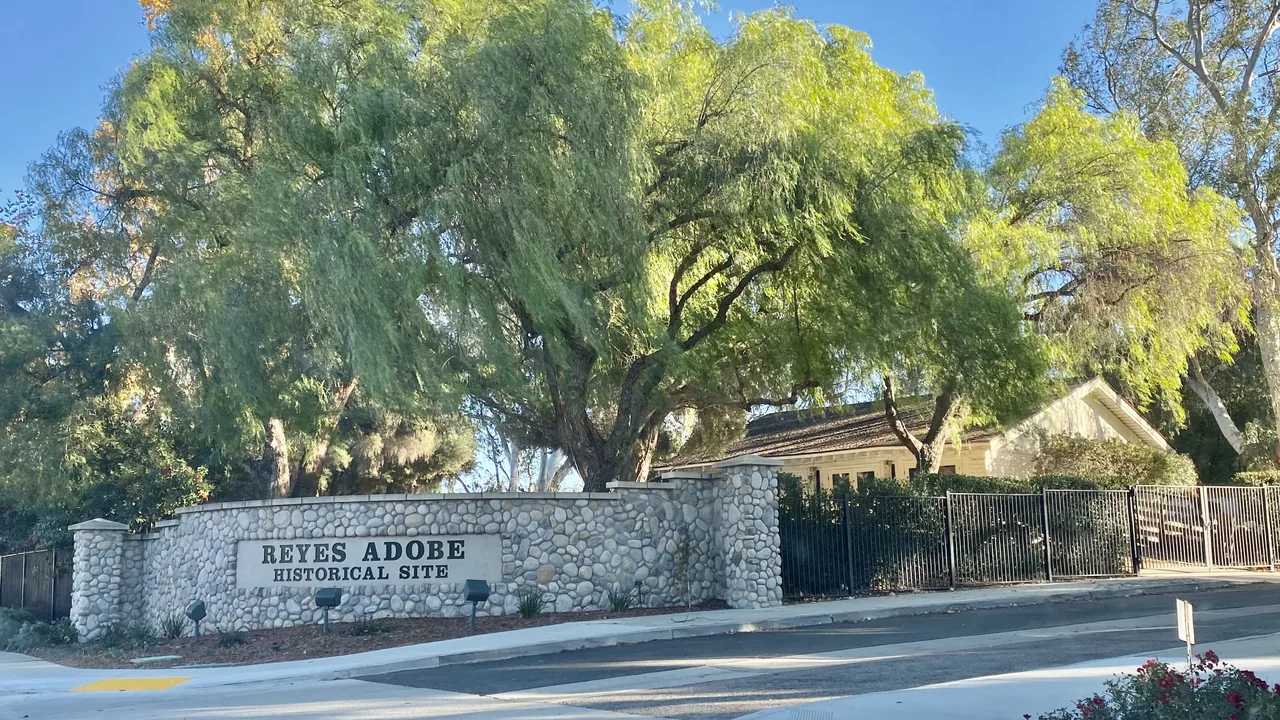
Reyes Adobe Historical Site, Agoura Hills

Reyes Adobe Historical Site, Agoura Hills

⌖ Agoura Hills, California

Haunted house & museumOpen to the public

Reyes Adobe preserves a family home from California’s rancho era inside a city-run historical site. The City of Agoura Hills dates its construction to about 1850 and credits Jose Paulino Reyes. His mother, Maria Antonia Machado, had purchased Rancho Las Virgenes in 1845. Today, furnished rooms interpret different periods of the family’s life, while the former barn displays artifacts, photographs and the property’s history. [City history](https://www.agourahillscity.gov/government/departments/community_services/reyes_adobe_historical_site/reyes_adobe_families.php) · [Museum interpretation](https://www.agourahillscity.gov/government/departments/community_services/reyes_adobe_historical_site/historical_site_tours.php) The building survived successive owners and repeated preservation campaigns. Malcolm McKenzie repaired it after buying the property in 1935. The city acquired the site in 1983, but earthquake damage in 1994 delayed plans to open it. A later rehabilitation culminated in the public opening on October 16, 2004. These changes make the adobe a record of both nineteenth-century domestic life and twentieth-century efforts to preserve it. [The Acorn](https://www.theacorn.com/articles/home-sweet-home/) · [Contemporary earthquake report](https://www.latimes.com/archives/la-xpm-1994-02-03-me-18584-story.html) · [City chronology](https://www.agourahillscity.gov/government/departments/community_services/reyes_adobe_historical_site/reyes_adobe_families.php) The city currently offers self-guided tours on limited opening dates. Its museum access should not be confused with unrestricted entry to a former home. [Official visitor information](https://www.agourahillscity.gov/government/departments/community_services/reyes_adobe_historical_site/index.php)

Open case file →

Jengod / Wikimedia Commons · CC BY-SA 4.0 · Responsive resize; EXIF/GPS removed; cinematic display framing/tone; local derivatives preserve full aspect ratio and do not upscale; original source remains unchanged

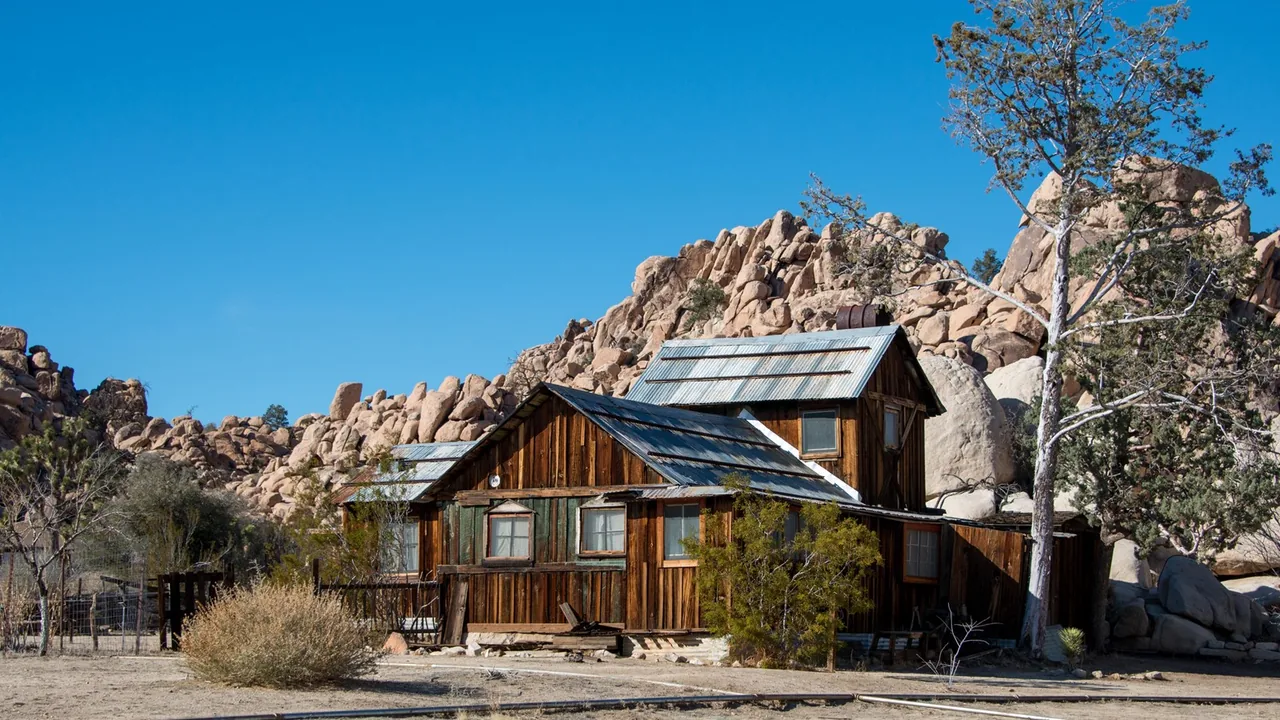
Keys Ranch (Desert Queen Ranch), Joshua Tree National Park

Keys Ranch (Desert Queen Ranch), Joshua Tree National Park

⌖ Joshua Tree National Park, California

Other historyOpen to the public

Keys Ranch preserves a family homestead whose history reaches well beyond a famous shooting. Bill Keys filed a homestead claim in 1917; Frances Lawton Keys helped sustain the desert household through gardening, livestock care, preserving food, teaching and selling goods. Mining and ranching were only part of the work that made this isolated place viable. The National Park Service's history gives Frances a central role in that achievement. [Frances Lawton Keys, NPS](https://www.nps.gov/articles/000/frances-lawton-keys.htm) On May 11, 1943, Bill Keys shot and killed Worth Bagley during a longstanding dispute. Keys said he acted in self-defense; a jury convicted him of manslaughter. He received a ten-year sentence, was paroled in 1948 and returned to the ranch. Accounts agree that he later received a pardon but differ on its year. The killing should not overshadow the family's decades of work here. [Advocate, 2022](https://www.advocatemagazine.com/issues/2022-august/summer-in-the-high-desert-joshua-tree) Today the ranch is a protected historic site in Joshua Tree National Park. Admission is limited to reserved ranger-led tours, not independent exploration. Its value is documented history; this profile makes no supernatural claim. [NPS ranch tours](https://www.nps.gov/jotr/planyourvisit/ranchtour.htm)

◯ General area onlyOpen case file →

NPS / Lian Law. No protection is claimed in the original U.S. Government work. · Public domain (US) · Responsive resize; EXIF/GPS removed; cinematic display framing/tone; local derivatives preserve full aspect ratio and do not upscale; original source remains unchanged

Newhall Ranch House, Heritage Junction

⌖ Santa Clarita, California

Haunted house & museumOpen to the public

The Newhall Ranch House survives at Heritage Junction in William S. Hart Park, but its history began elsewhere. The historical society describes a small predecessor traditionally associated with Thomas R. Bard's 1865 purchase of Rancho San Francisco; the surviving Victorian house took its larger form in the 1890s. Its earliest construction date is uncertain. It became a home for the ranch foreman and accommodated visiting company officials until 1973. [Operator history](https://scvhs.org/visit/) Margaret Routledge, wife of the ranch manager, died there on January 24, 1916. The local archive reproduces a death record that could not determine whether the shooting was suicide or accidental. An unidentified contemporary newspaper also discussed murder as a possibility, without establishing it. These records document an unresolved death, not a proven homicide or a supernatural explanation. [Archived records](https://scvhistory.com/scvhistory/margaretroutledge.htm) In August 1990, preservationists moved the house to Heritage Junction in two sections over two nights. Contemporary reporting describes the building arriving safely after a narrow bridge interrupted the move. That rescue, independently reported by the Los Angeles Times, is an important part of the house's story alongside the later ghost folklore. [Contemporary report](https://www.latimes.com/archives/la-xpm-1990-08-18-me-519-story.html)

◯ General area onlyOpen case file →
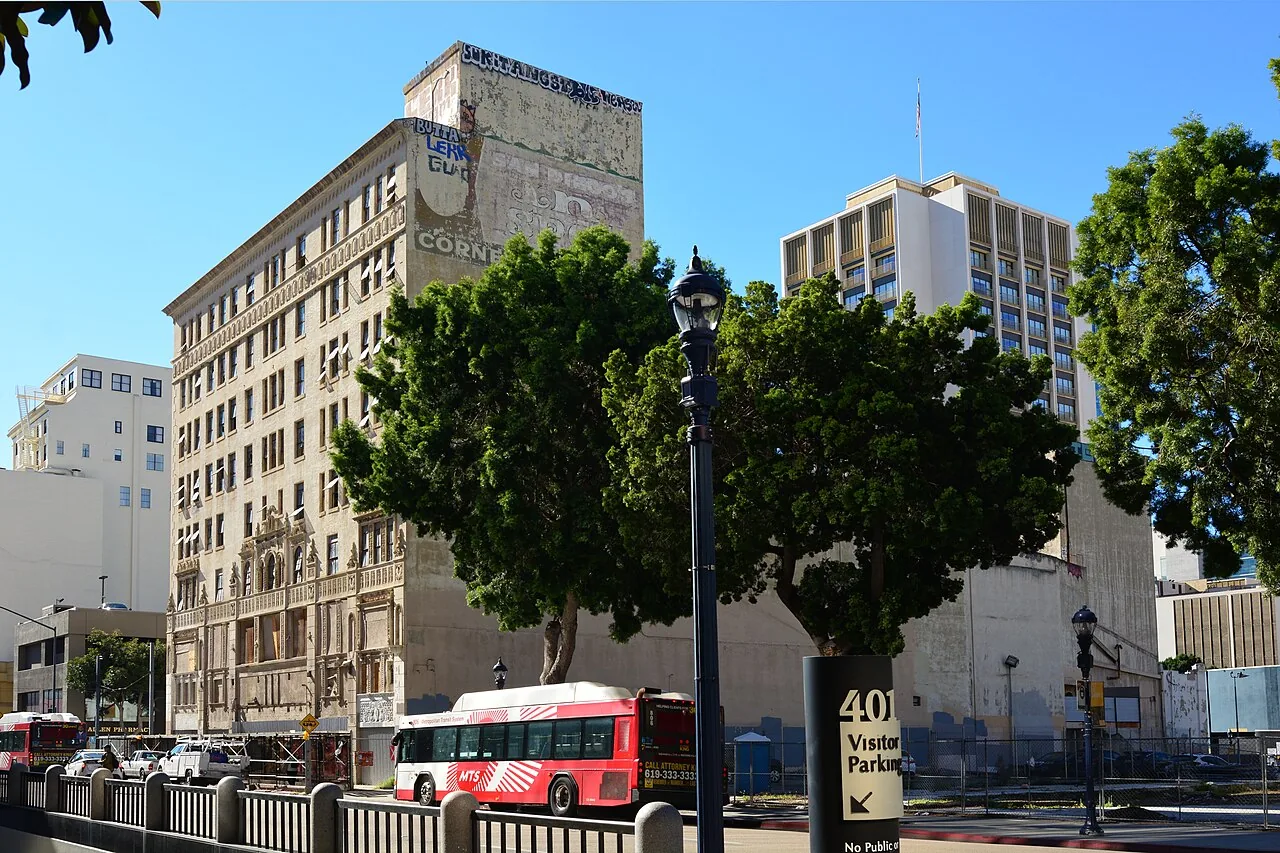
California Theatre (San Diego)

California Theatre (San Diego)

⌖ San Diego, California

Abandoned buildingAbandoned

The California Theatre opened on April 22, 1927 as the New California Theatre, a 2,200-seat Spanish Colonial Revival movie palace. Gold-leaf ceilings, murals and a Wurlitzer organ helped earn it the contemporary description ‘cathedral of the motion picture.’ Its opening program paired a silent film with stage entertainment and a band. The name distinguished it from an older California Theatre, which became the Aztec in 1930. [San Diego History Center](https://sandiegohistory.org/collection/photographs/california/) The building combined the auditorium with shops and offices. In the 1970s it became a concert venue; the History Center dates the end of regular movies to 1976. The Old Globe also used the theatre while its own home was rebuilt after the 1978 fire. A 1988 renovation preceded its eventual closure in 1990. [History Center](https://sandiegohistory.org/collection/photographs/california/) · [SOHO](https://www.sohosandiego.org/endangered/mel2011/catheatre.htm) · [KPBS](https://www.kpbs.org/news/politics/2025/08/25/san-diegos-abandoned-california-theatre-faces-deadline-to-sell-or-demolish) Decades of vacancy followed. A 2025 city settlement required a sale effort or a controlled-demolition process and continued site security. Prebys Foundation purchased the property in July 2026. Its November 9 statement anticipates floor-by-floor removal beginning in January 2027, not completed demolition. This is a closed historical landmark, not an exploration destination. [City of San Diego](https://www.insidesandiego.org/city-attorney-announces-settlement-against-property-owner-downtown-california-theatre) · [Prebys Foundation](https://prebysfdn.org/stories/blog/the-california-theatre)

◯ General area onlyOpen case file →

© Joe Mabel, via Wikimedia Commons; CC BY-SA 4.0. Photographer’s perspective adjustment retained; publicly offered Commons 1,280-pixel thumbnail. · CC BY-SA 4.0 · Responsive resize; EXIF/GPS removed; cinematic display framing/tone; local derivatives preserve full aspect ratio and do not upscale; original source remains unchanged

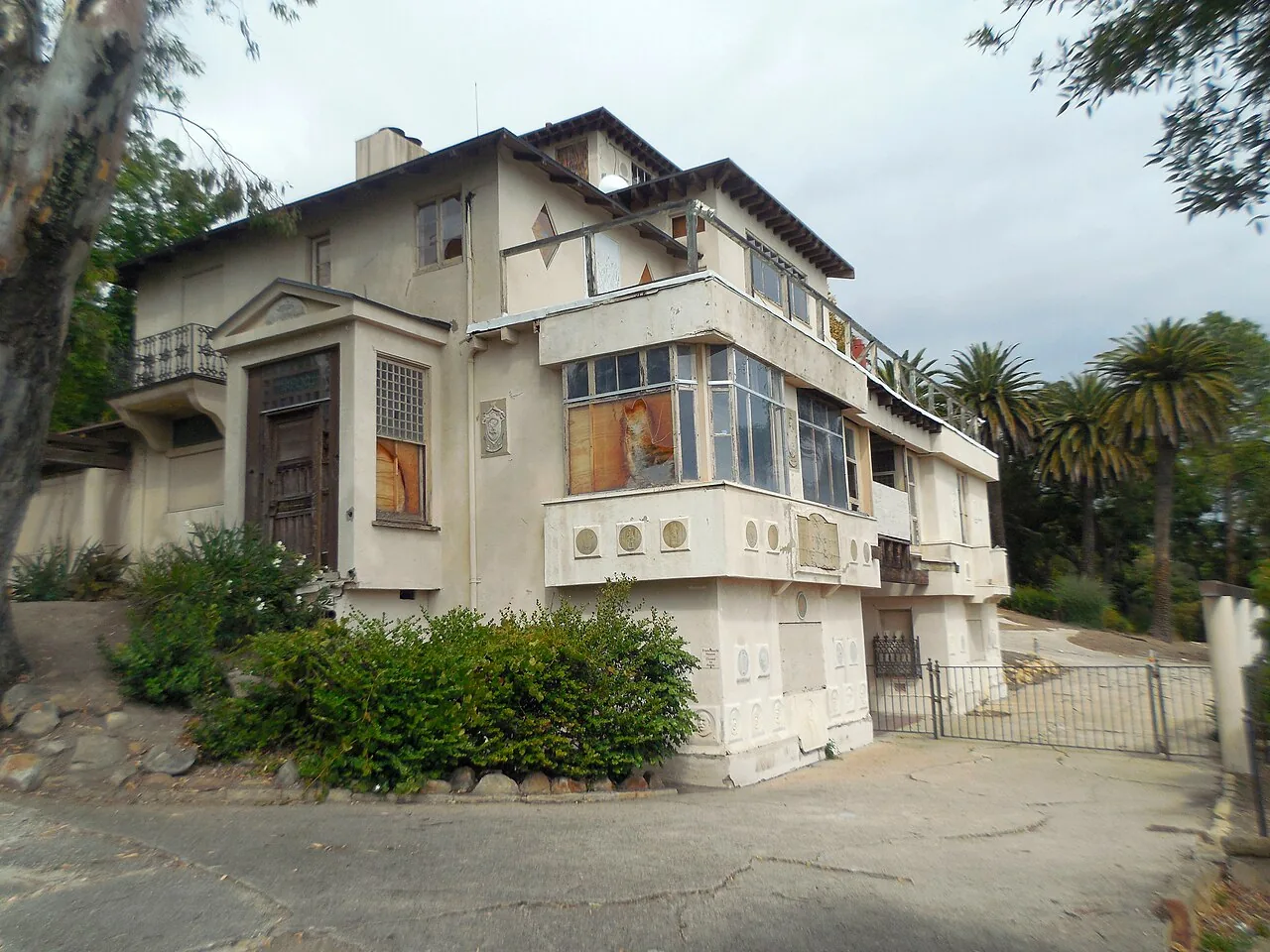
Franceschi House (Montarioso)

Franceschi House (Montarioso)

⌖ Santa Barbara, California

Abandoned buildingAbandoned

Franceschi House began not as a grand Italian villa, but as a redwood Craftsman home. Horticulturist Francesco Franceschi built it in 1905 and called the house and surrounding botanical garden Montarioso. His nursery and garden helped introduce hundreds of plant species to Southern California. [The City’s history](https://sbparksandrec.santabarbaraca.gov/projects/reimagining-franceschi-house) traces the building’s later transformation by philanthropist Alden Freeman, who gave the property to Santa Barbara for public park use in 1931. Freeman covered the original siding with stucco and decorated the exterior with plaster medallions honoring figures including Jane Addams and Mary Wollstonecraft, according to [Preservation magazine](https://savingplaces.org/stories/santa-barbara-debates-franceschi-houses-future). The building later housed horticultural classes and WPA orchestra rehearsals, documented in the [Santa Barbara Independent](https://www.independent.com/2026/04/09/franceschi-house-and-park-part-ii/). The public park survived, but the house became uninhabitable by about 1992, the Parks director told [KCLU](https://www.kclu.org/local-news/2024-05-15/its-historic-but-also-a-wreck-santa-barbara-mulling-replacing-house-in-park-with-scenic-overlook). In 2018, the Council voted to replace it with an open-air space. The City now describes a proposed overlook and a tentative approval process extending to 2028, with construction funding still unallocated. That is a planning forecast, not a demolition date. Public park access does not authorize entry into the house.

◯ General area onlyOpen case file →

© Niranjan Arminius / Wikimedia Commons; CC BY-SA 4.0. Source: Commons-rescaled 1,280 × 960 thumbnail. · CC BY-SA 4.0 · Responsive resize; EXIF/GPS removed; cinematic display framing/tone; local derivatives preserve full aspect ratio and do not upscale; original source remains unchanged

Hollywood Forever Cemetery

Hollywood Forever Cemetery

Los Angeles, California

CemeteryCemeteryOpen to the public

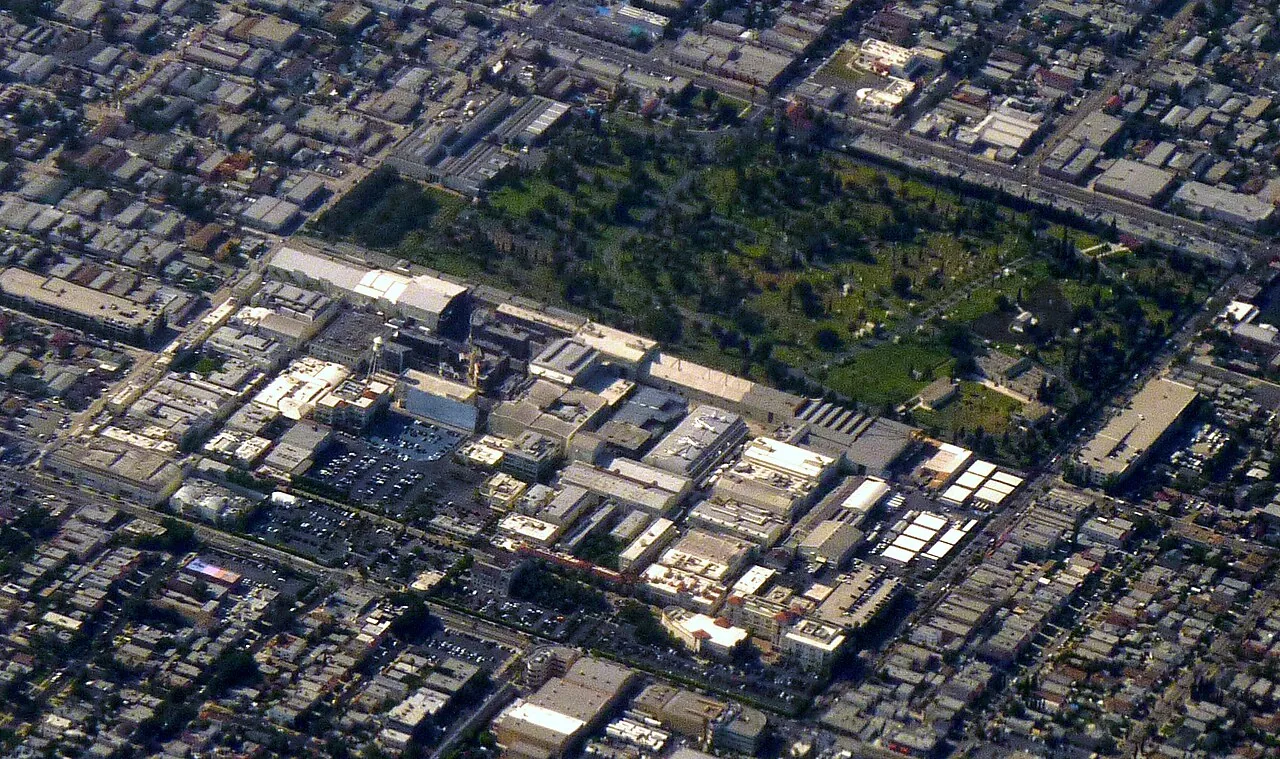
Founded in 1899, Hollywood Forever preserves the history of Hollywood in a cemetery that still serves its surrounding community. Paramount Studios occupies the undeveloped southern portion of the original cemetery site, tying the landscape directly to the growth of the film industry. Its lawn-park design, associated with cemetery planner Joseph Earnshaw, and its chapels and mausoleums make the grounds significant beyond their famous names. The cemetery declined during the late twentieth century and faced bankruptcy in 1998. New ownership that year began a restoration and adopted the Hollywood Forever name. National Register recognition followed in 1999; Los Angeles designated the property a Historic-Cultural Monument in 2022. Today its cultural life includes film screenings, concerts and Día de los Muertos celebrations. A memorial also records an exclusion the cemetery once enforced. Hattie McDaniel was refused burial here in 1952 because of a racially discriminatory policy; a cenotaph was dedicated in her honor in 1999. It is not her grave. Actual interments include Judy Garland, Cecil B. DeMille, Rudolph Valentino, Douglas Fairbanks and Dee Dee Ramone. Johnny Ramone's prominent monument should likewise be distinguished from a verified burial. This is a working cemetery, not an abandoned site.

Open case file →

© Bobak Ha'Eri, ‘2009-0727-CA-Paramount-HollywoodForever.jpg’, via Wikimedia Commons. Permission field: CC BY-SA 3.0; licensing section: CC BY 3.0. Adaptations must honor the stricter CC BY-SA 3.0 terms. · CC BY-SA 3.0 · Responsive resize; EXIF/GPS removed; cinematic display framing/tone; local derivatives preserve full aspect ratio and do not upscale; original source remains unchanged

Bodie Cemetery, Bodie State Historic Park

Bodie Cemetery, Bodie State Historic Park

Bridgeport area, California

CemeteryCemeteryOpen to the public

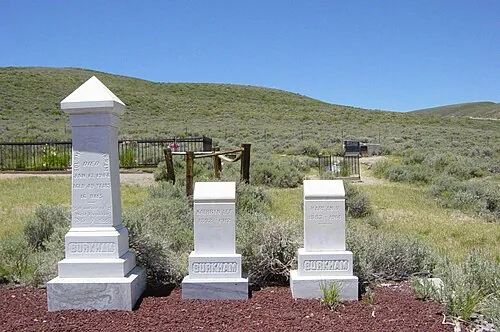
Bodie’s burial grounds overlook the mining town they served. According to the [Bodie Foundation’s conservation history](https://www.bodiefoundation.org/bodie-cemetery-gets-new-life/), the original cemetery occupied waterlogged flatlands before relocation to the present site in the 1870s. The cemetery belongs to a community whose story began with an 1859 gold discovery and expanded into a late-1870s mining boom. The [National Park Service](https://www.nps.gov/places/bodie-historic-district.htm) describes a town with schools, businesses, churches and cemeteries, followed by declining mining fortunes and destructive fires in 1892 and 1932. Mining was suspended in 1942; California established the state historic park in 1962. The familiar description ‘arrested decay’ means preservation, not an invitation to explore an unmanaged ruin. That care extends to the cemetery. A Foundation report records 28 stone grave markers straightened, reset and conserved in autumn 2010, including work to replace rusting iron pins and repair fractured stone. It documents a conservation campaign, not a survey of present condition. Today, [official visitor guidance](https://www.parks.ca.gov/?page_id=31546) offers a self-guided cemetery tour. Visits remain subject to park hours, posted closures and weather-dependent access; grave markers and other historic material must remain undisturbed.

◯ General area onlyOpen case file →

© Daniel Mayer — Bodie cemetery5.jpeg, June 2004, via Wikimedia Commons; CC BY-SA 3.0. Adaptations must retain attribution and use the same or a compatible license. · CC BY-SA 3.0 · Responsive resize; EXIF/GPS removed; cinematic display framing/tone; local derivatives preserve full aspect ratio and do not upscale; original source remains unchanged

Add to the archive

Know a story worth telling?

Send a place name, its town, and a credible source link. Please don’t include private addresses, exact locations, or personal details.