Browse the archive

Haunted house museum

Haunted house museum case files: historic context, historical accounts, sources, and access cautions from the archive.

Whaley House

Whaley House

⌖ San Diego (Old Town), California

Haunted house & museumOpen to the public

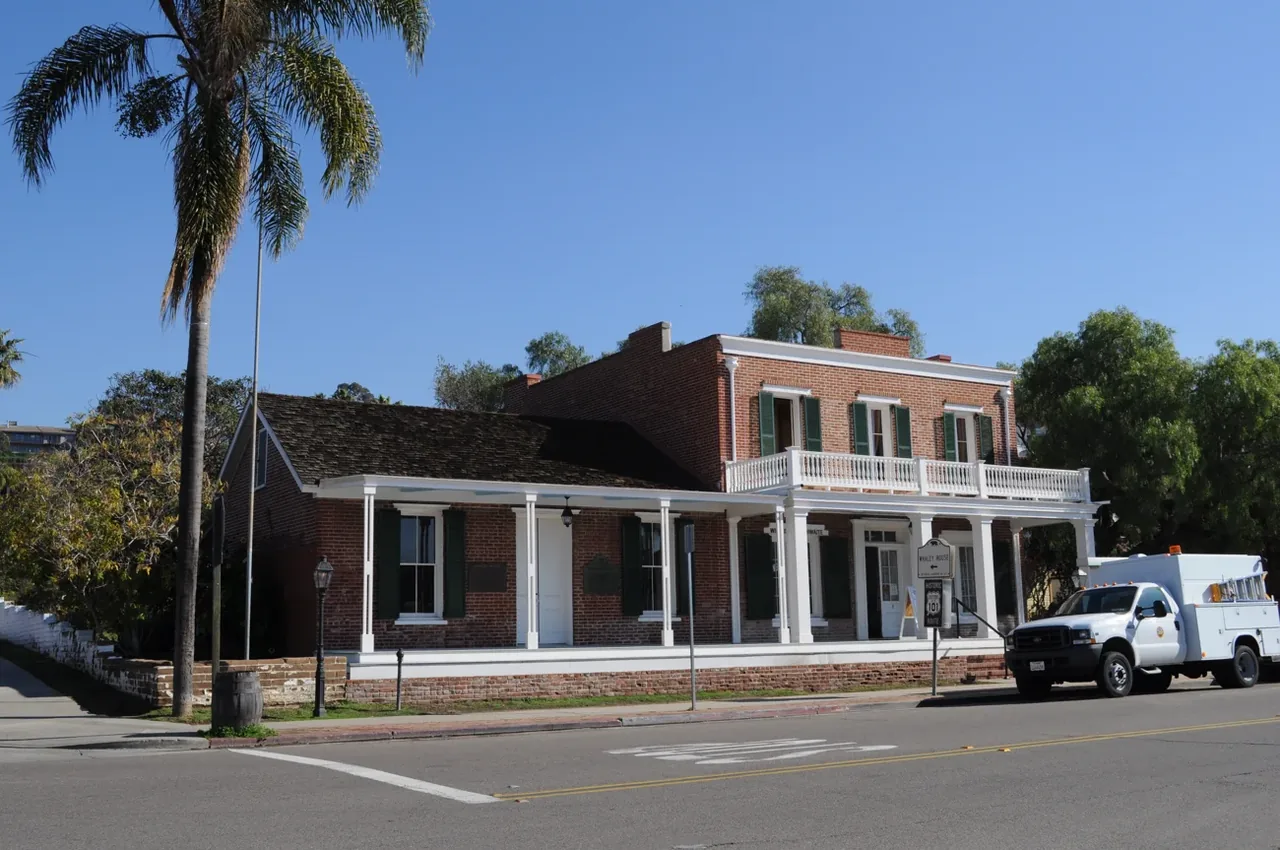
Completed in 1857, the Whaley House brings several chapters of Old Town San Diego into one brick building. Thomas Whaley designed the Greek Revival home and used bricks from his own brickyard. The County of San Diego identifies it as the city's first two-story brick building; it is also California Historical Landmark No. 65. [County history](https://www.sdparks.org/content/sdparks/en/park-pages/WhaleyHouse.html) · [Landmark record](https://ohp.parks.ca.gov/ListedResources/Detail/65) The building was more than a family residence. Its rooms accommodated a general store, San Diego's first commercial theater in 1868, and the county courthouse. Whaley and Philip Crosthwaite opened their store here in 1869. Family loss also belongs to its documented history: Thomas and Anna's infant son died in 1858, and their daughter Violet died in 1885. These events are distinct from the house's later ghost traditions. [SOHO history](https://www.sohosandiego.org/educators/images/lessonspioneerwhaleyfamily.pdf) Frank Whaley returned in 1909 to restore the aging building and show it to visitors. After a preservation campaign, the County purchased the house in 1956; the museum opened in May 1960. Today it remains a county-owned museum offering daytime self-guided visits and reserved evening guided tours. [Preservation history](https://www.sohosandiego.org/educators/images/lessonspioneerwhaleyfamily.pdf) · [Current tickets](https://www.whaleyhousesandiego.com/tickets/)
◯ General area onlyOpen case file →

San Diego - Whaley House 01.jpg — © Joe Mabel, CC BY-SA 3.0. Adaptation under CC BY-SA 3.0. · CC BY-SA 3.0 · Responsive resize; EXIF/GPS removed; cinematic display framing/tone; local derivatives preserve full aspect ratio and do not upscale; original source remains unchanged

Villa Montezuma

Villa Montezuma

⌖ San Diego (Sherman Heights), California

Haunted house & museumOpen to the public

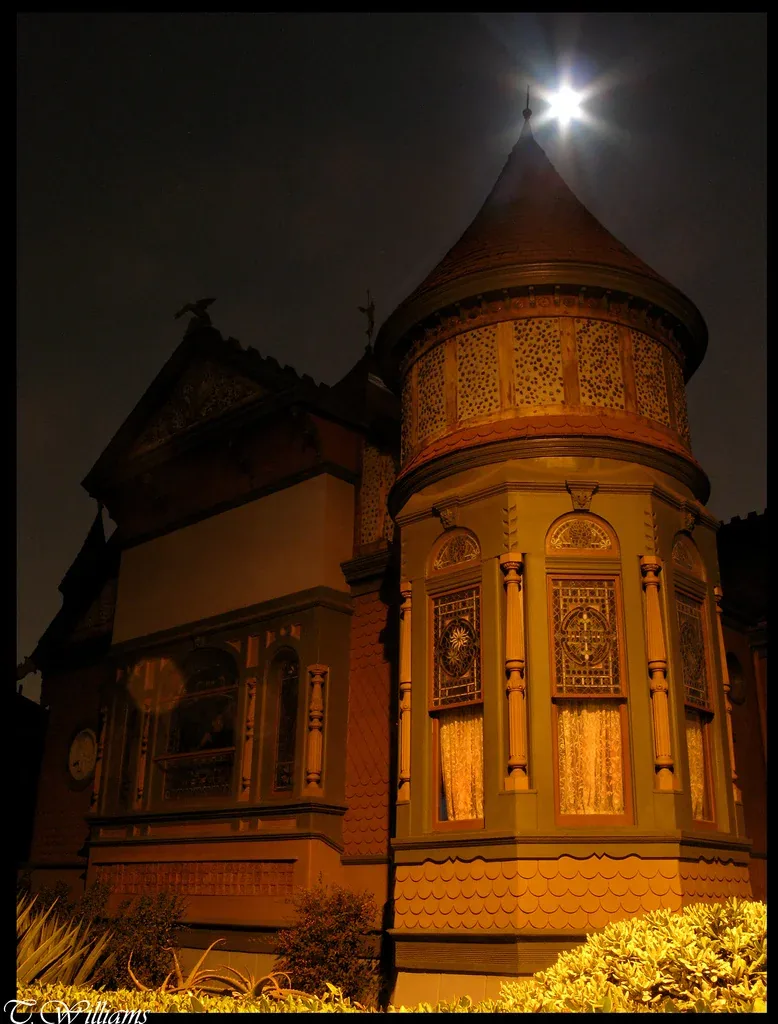
Villa Montezuma is an 1887 Queen Anne house museum in San Diego's Sherman Heights, built for pianist, vocalist and writer Jesse Shepard. Architects Comstock and Trotsche gave the house an elaborate Victorian design, with pictorial and patterned colored glass central to its character. Shepard later wrote under the name Francis Grierson; the [Historic American Buildings Survey](https://www.loc.gov/resource/hhh.ca0614.photos/?st=grid) records both careers and the building's architectural significance. The house was more than a showpiece. Shepard hosted invited musical gatherings and developed his literary career here before selling the Villa in December 1889. Historian [Clare Crane's documented account](https://sandiegohistory.org/journal/1970/july/shepard/) also challenges sensational stories about his patrons and distinguishes his spiritual interests from claims that the house served as a séance business. Preservation efforts saved the building in the 1960s, and it opened as a museum in November 1972. A 1986 fire led to restoration and reopening in 1987. Today the City owns the museum and the Friends of the Villa Montezuma operate it. The [operator's current guidance](https://villamontezumamuseum.org/) confirms guided weekend tours during ongoing restoration, with advance reservations. The grounds are not freely accessible, and interior photography is prohibited.

◯ General area onlyOpen case file →

Villa Montezuma — © Timm Williams, CC BY 2.0 · CC BY 2.0 · Responsive resize; EXIF/GPS removed; cinematic display framing/tone; local derivatives preserve full aspect ratio and do not upscale; original source remains unchanged

Rancho Guajome Adobe

⌖ Vista, California

Haunted house & museumOpen to the public

Rancho Guajome Adobe preserves a hacienda built in 1852–53 on land once associated with Mission San Luis Rey. The Mexican government granted the rancho to Luiseño brothers Andrés and José Manuel in 1845. After the land passed to Abel Stearns, he gave it to Ysidora Bandini as a wedding gift when she married Cave Johnson Couts in 1851. The family moved to the ranch in 1853. [Architectural history](https://sandiegohistory.org/journal/1995/october/archlegacy/) traces that transition from mission lands to a ranching household. The 28-room adobe contains two courtyards, an arcaded veranda and a chapel. Its construction and operation depended on Luiseño labor; [The Cultural Landscape Foundation](https://www.tclf.org/rancho-guajome-adobe-county-park) describes the workers as indentured. The familiar arched façade was added in the 1920s, rather than belonging to the original 1850s design. These layers make the building a record of changing architecture as well as an unequal ranching society. Recognized as a National Historic Landmark in 1970 and acquired by San Diego County in 1973, the adobe is now a public museum within a county park. The [County operator](https://www.sdparks.org/RanchoGuajomeAdobe) offers self-guided visits during museum hours and guided tours by advance appointment. Reported hauntings belong to attributed folklore, not the documented history of the building.

◯ General area onlyOpen case file →

Garcia-Pryor House (O'Neill Museum), San Juan Capistrano

⌖ San Juan Capistrano, California

Haunted house & museumOpen to the public

The O'Neill Museum preserves a different side of San Juan Capistrano's past: a wooden family home rather than a mission adobe. The [Historical Society](https://sjchistoricalsociety.com/oneill-museum/) dates its construction to 1870–1880, when saloon owner Jose Garcia built it for his wife, Refugio Yorba. It was one of the town's first frame houses. Originally elsewhere in town, it later became the Pryor family home; the Society records their residence through 1955. Garcia was killed in the 1890s, but the consulted accounts disagree on the year. The house should not be presented as the scene of that killing. The Cornwell family donated the building to the Society in 1976. It was moved to Los Rios Street, restored and furnished with period furniture. O'Neill family support helped fund the work, and the museum honors Marguerite O'Neill. Its value extends beyond the rooms: it is also the Society's headquarters and archival center. In 1994, the [Los Angeles Times](https://www.latimes.com/archives/la-xpm-1994-12-22-me-11876-story.html) reported that 53 photographs from a local family's album had been reproduced for the collection and were being displayed here. Today the operator welcomes museum visitors during its published hours. The porch-and-cigar ghost story belongs to local folklore, not the documented explanation of the building's survival.

◯ General area onlyOpen case file →
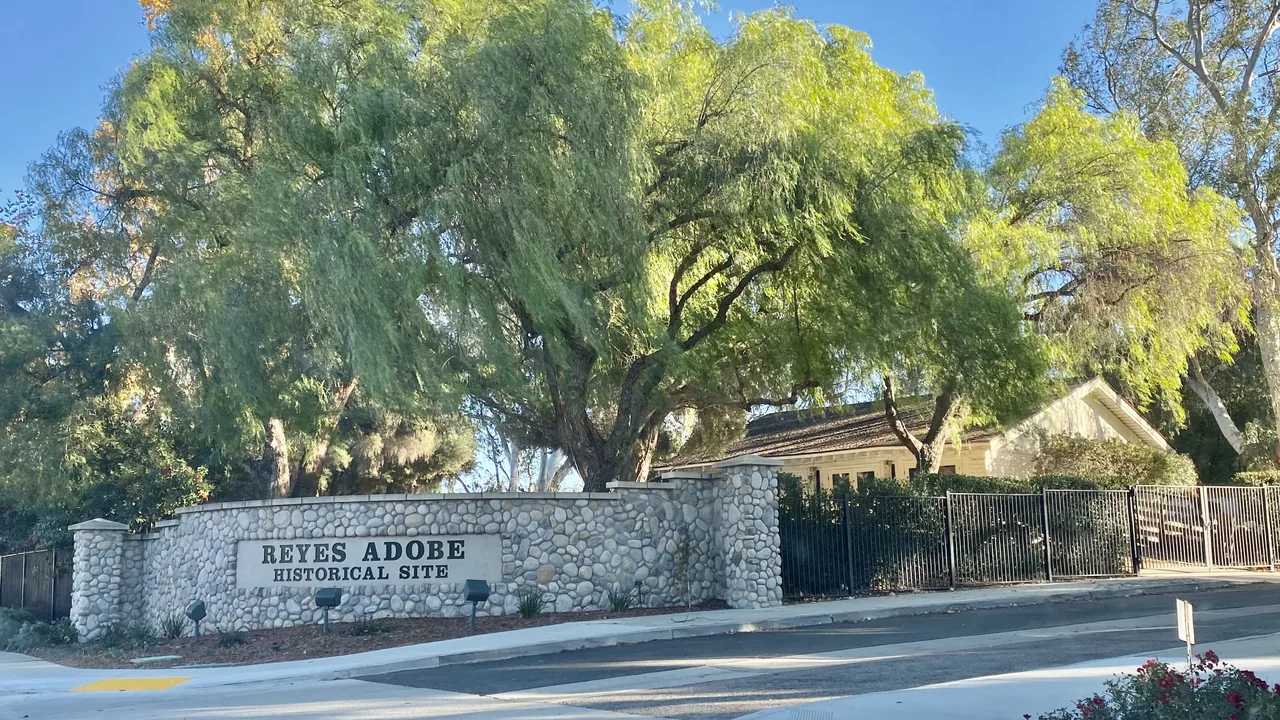
Reyes Adobe Historical Site, Agoura Hills

Reyes Adobe Historical Site, Agoura Hills

⌖ Agoura Hills, California

Haunted house & museumOpen to the public

Reyes Adobe preserves a family home from California’s rancho era inside a city-run historical site. The City of Agoura Hills dates its construction to about 1850 and credits Jose Paulino Reyes. His mother, Maria Antonia Machado, had purchased Rancho Las Virgenes in 1845. Today, furnished rooms interpret different periods of the family’s life, while the former barn displays artifacts, photographs and the property’s history. [City history](https://www.agourahillscity.gov/government/departments/community_services/reyes_adobe_historical_site/reyes_adobe_families.php) · [Museum interpretation](https://www.agourahillscity.gov/government/departments/community_services/reyes_adobe_historical_site/historical_site_tours.php) The building survived successive owners and repeated preservation campaigns. Malcolm McKenzie repaired it after buying the property in 1935. The city acquired the site in 1983, but earthquake damage in 1994 delayed plans to open it. A later rehabilitation culminated in the public opening on October 16, 2004. These changes make the adobe a record of both nineteenth-century domestic life and twentieth-century efforts to preserve it. [The Acorn](https://www.theacorn.com/articles/home-sweet-home/) · [Contemporary earthquake report](https://www.latimes.com/archives/la-xpm-1994-02-03-me-18584-story.html) · [City chronology](https://www.agourahillscity.gov/government/departments/community_services/reyes_adobe_historical_site/reyes_adobe_families.php) The city currently offers self-guided tours on limited opening dates. Its museum access should not be confused with unrestricted entry to a former home. [Official visitor information](https://www.agourahillscity.gov/government/departments/community_services/reyes_adobe_historical_site/index.php)

Open case file →

Jengod / Wikimedia Commons · CC BY-SA 4.0 · Responsive resize; EXIF/GPS removed; cinematic display framing/tone; local derivatives preserve full aspect ratio and do not upscale; original source remains unchanged

Newhall Ranch House, Heritage Junction

⌖ Santa Clarita, California

Haunted house & museumOpen to the public

The Newhall Ranch House survives at Heritage Junction in William S. Hart Park, but its history began elsewhere. The historical society describes a small predecessor traditionally associated with Thomas R. Bard's 1865 purchase of Rancho San Francisco; the surviving Victorian house took its larger form in the 1890s. Its earliest construction date is uncertain. It became a home for the ranch foreman and accommodated visiting company officials until 1973. [Operator history](https://scvhs.org/visit/) Margaret Routledge, wife of the ranch manager, died there on January 24, 1916. The local archive reproduces a death record that could not determine whether the shooting was suicide or accidental. An unidentified contemporary newspaper also discussed murder as a possibility, without establishing it. These records document an unresolved death, not a proven homicide or a supernatural explanation. [Archived records](https://scvhistory.com/scvhistory/margaretroutledge.htm) In August 1990, preservationists moved the house to Heritage Junction in two sections over two nights. Contemporary reporting describes the building arriving safely after a narrow bridge interrupted the move. That rescue, independently reported by the Los Angeles Times, is an important part of the house's story alongside the later ghost folklore. [Contemporary report](https://www.latimes.com/archives/la-xpm-1990-08-18-me-519-story.html)

◯ General area onlyOpen case file →
Add to the archive

Know a story worth telling?

Send a place name, its town, and a credible source link. Please don’t include private addresses, exact locations, or personal details.