
Haunted, Abandoned & Dark-History Places in San Diego County
San Diego County stories connect familiar haunting traditions with documented losses and engineering failures. Completed in 1857, Old Town’s Whaley House accommodated a family home, general store, commercial theater and courthouse. Its family tragedies belong to the historical record; later accounts of spirits remain attributed folklore.
In Coronado, Hotel del Coronado’s history records Kate Morgan’s death in 1892 and the coroner’s finding of a self-inflicted injury. Ghost stories associated with Morgan are hotel traditions and reported experiences, not verified supernatural events.
In Carrizo Gorge, Goat Canyon Trestle was built in the early 1930s to bypass a collapsed railway tunnel. Floods, fires, rockslides and tunnel failures repeatedly interrupted the railway connection. The Lower Otay Dam failure in 1916 sent floodwater through the Otay Valley. The San Diego History Center records at least twenty deaths, and Japanese residents were among those memorialized. These profiles distinguish recorded disasters from the legends attached to other places.
San Diego
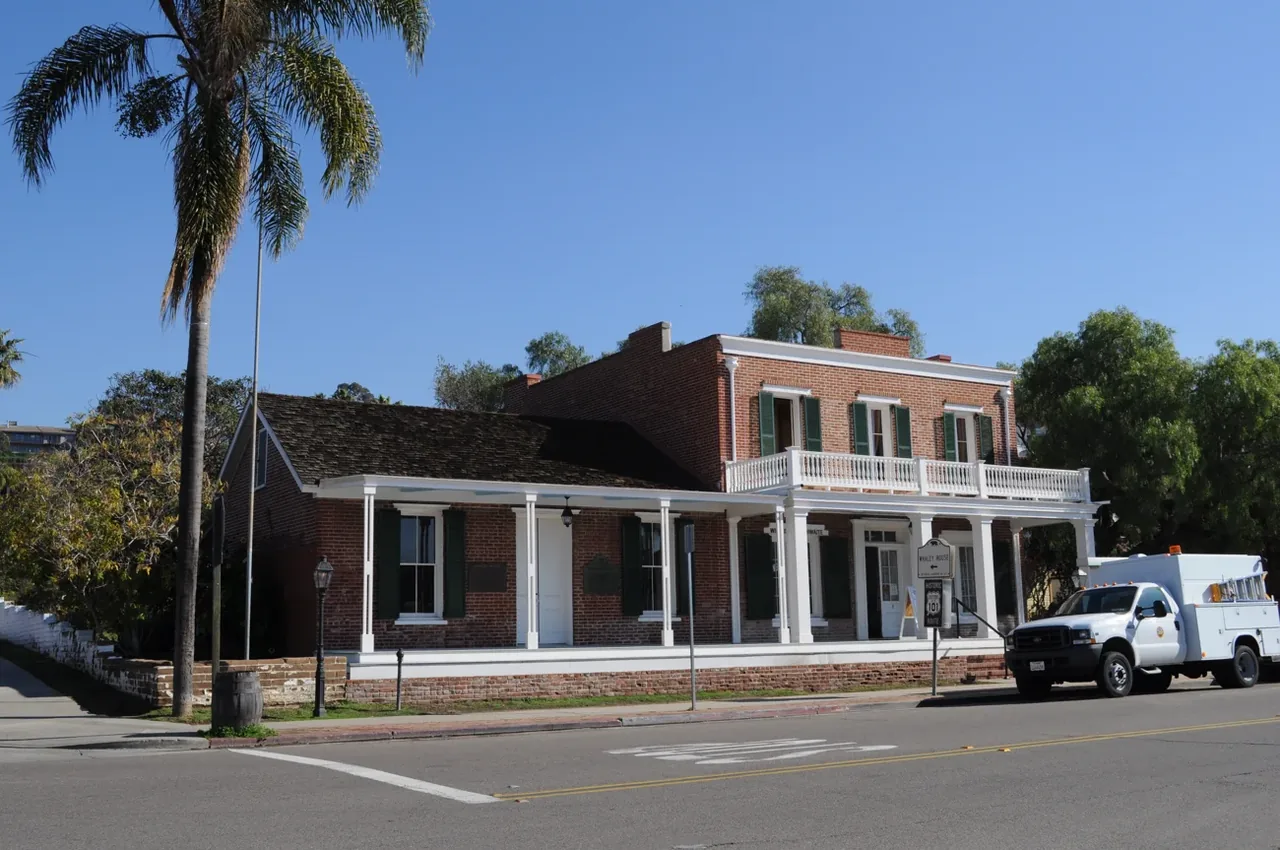
Whaley House
⌖ San Diego (Old Town), California
Completed in 1857, the Whaley House brings several chapters of Old Town San Diego into one brick building. Thomas Whaley designed the Greek Revival home and used bricks from his own brickyard. The County of San Diego identifies it as the city's first two-story brick building; it is also California Historical Landmark No. 65. County history · Landmark record The building was more than a family residence. Its rooms accommodated a general store, San Diego's first commercial theater in 1868, and the county courthouse. Whaley and Philip Crosthwaite opened their store here in 1869. Family loss also belongs to its documented history: Thomas and Anna's infant son died in 1858, and their daughter Violet died in 1885. These events are distinct from the house's later ghost traditions. SOHO history Frank Whaley returned in 1909 to restore the aging building and show it to visitors. After a preservation campaign, the County purchased the house in 1956; the museum opened in May 1960. Today it remains a county-owned museum offering daytime self-guided visits and reserved evening guided tours. Preservation history · Current tickets
Open case file →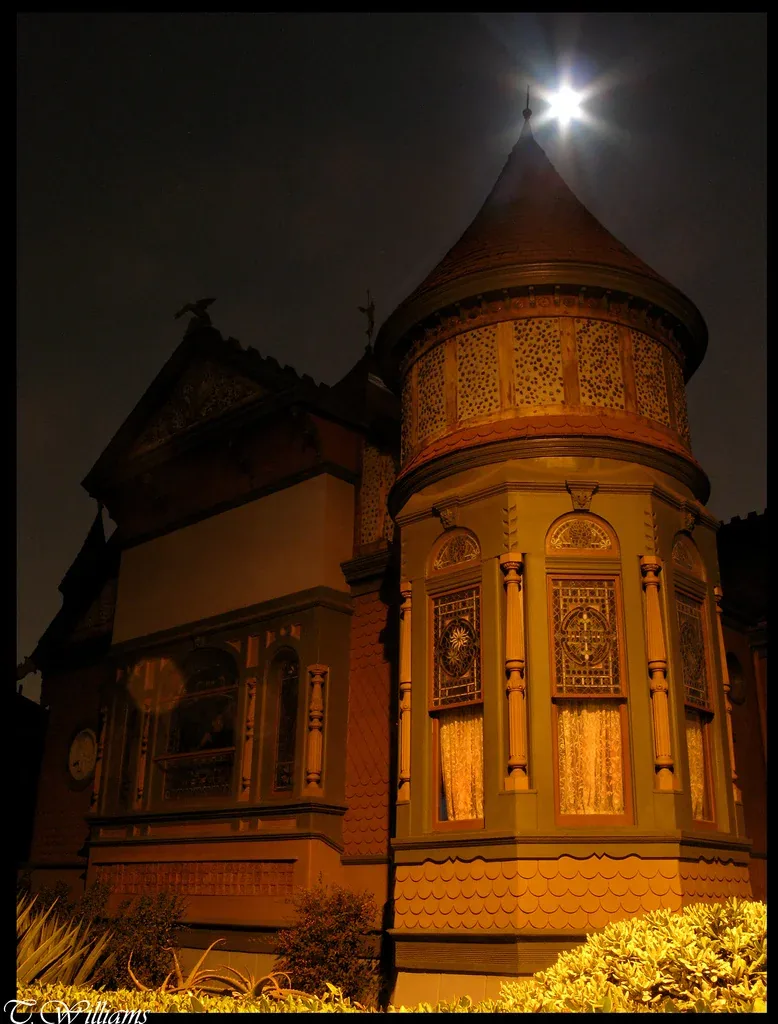
Villa Montezuma
⌖ San Diego (Sherman Heights), California
Villa Montezuma is an 1887 Queen Anne house museum in San Diego's Sherman Heights, built for pianist, vocalist and writer Jesse Shepard. Architects Comstock and Trotsche gave the house an elaborate Victorian design, with pictorial and patterned colored glass central to its character. Shepard later wrote under the name Francis Grierson; the Historic American Buildings Survey records both careers and the building's architectural significance. The house was more than a showpiece. Shepard hosted invited musical gatherings and developed his literary career here before selling the Villa in December 1889. Historian Clare Crane's documented account also challenges sensational stories about his patrons and distinguishes his spiritual interests from claims that the house served as a séance business. Preservation efforts saved the building in the 1960s, and it opened as a museum in November 1972. A 1986 fire led to restoration and reopening in 1987. Today the City owns the museum and the Friends of the Villa Montezuma operate it. The operator's current guidance confirms guided weekend tours during ongoing restoration, with advance reservations. The grounds are not freely accessible, and interior photography is prohibited.
Open case file →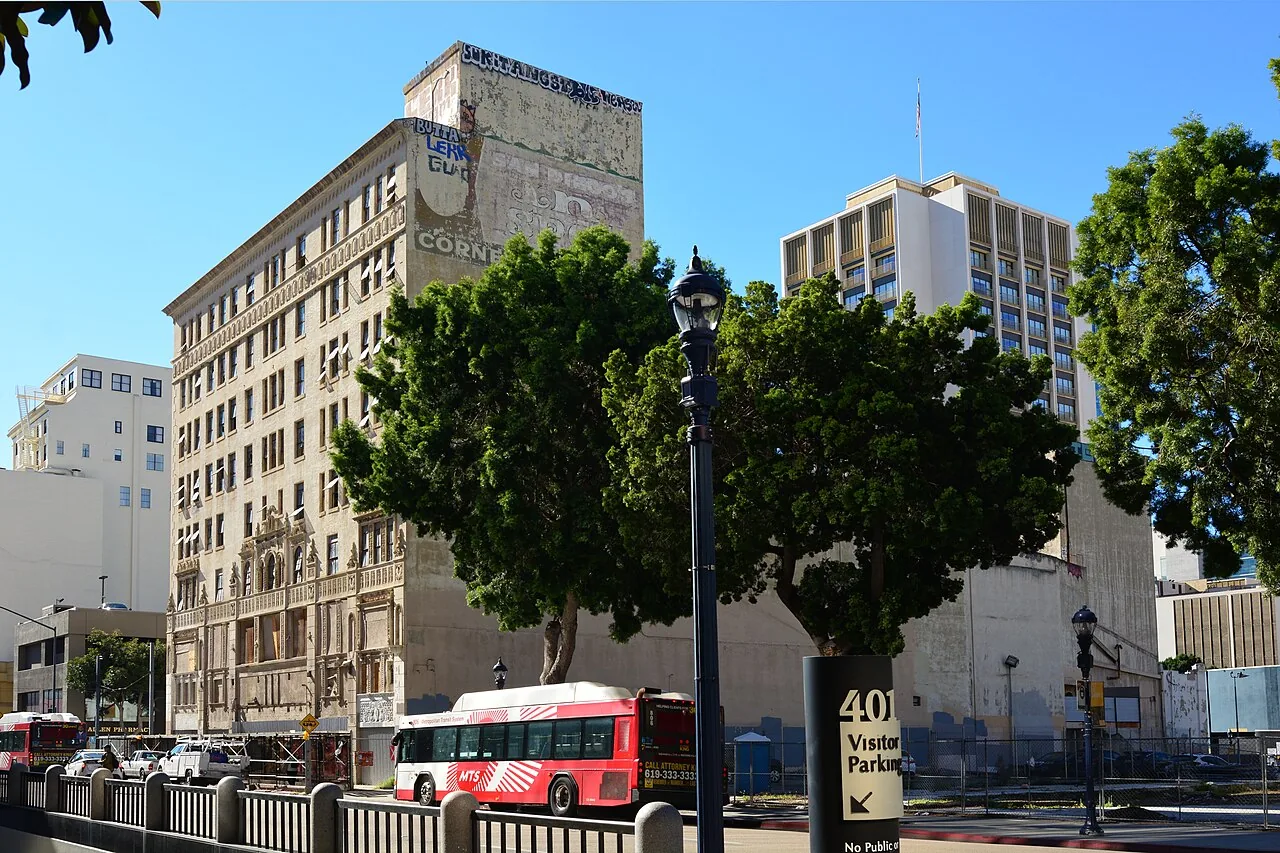
California Theatre (San Diego)
⌖ San Diego, California
The New California Theatre opened in San Diego on April 22, 1927, with a silent film, stage entertainment and a band. The 2,200-seat Spanish Colonial Revival movie palace had gold-leaf ceilings, murals and a Wurlitzer organ, while the building also housed shops and offices. Its name distinguished it from an older California Theatre, renamed the Aztec in 1930. In the 1970s, the California became a concert venue; regular movie screenings ended in 1976. The Old Globe used the theatre while its own home was rebuilt after the 1978 fire. A renovation followed in 1988, but the theatre closed in 1990 because of structural safety concerns.
◯ General area onlyOpen case file →Sandrock's store, Mission Valley
⌖ Mission Valley, San Diego, California
Anne A. Sandrock was a German-born merchant, aged 53, whose Mission Valley store also served as a dwelling. She was killed there on October 5, 1895. The next day's San Diego Union and Daily Bee reported injuries to her head and throat, a medical examination and an inquest held that night. The Union reported a finding of murder. The inquest account later reproduced by the San Diego Reader described wounds inflicted by parties unknown. By October 10, the Union reported that Jose Rosa and Ramon Meche had been captured at Descanso and jailed in San Diego, but emphasized that there was very little evidence against them.
◯ General area onlyOpen case file →The Tower Nobody Could Use: 107 Ash Street (formerly 101 Ash), San Diego
⌖ San Diego, California
San Diego bought a 21-story former utility headquarters to bring city offices together. Weeks after staff moved in, asbestos forced an evacuation. The tower has stood empty for more than six years and became one of the city's most expensive real-estate scandals. The tower opened in 1968 and was the headquarters of SDG&E and later Sempra Energy. In October 2016 the City Council approved a lease-to-own deal for it. City employees occupied the building for only a few weeks in late 2019 and early 2020, until construction work dislodged asbestos and the City evacuated it. It has been vacant ever since. The broker who arranged the deal, Jason Hughes, had been paid a commission by the sellers. He pleaded guilty in 2023 to a misdemeanor conflict-of-interest charge and agreed to repay $9.4 million. The City settled the related lawsuits in 2022 and took ownership. Vacant, with a "No Trespassing" sign. In 2025 the Council approved a ground lease to convert the tower to housing. On Sept 15, 2026 it amended the deal: 252 units, 249 of them affordable, plus retail and childcare space. The building has been renamed 107 Ash Street.
◯ General area onlyOpen case file →City of Wood: Camp Callan, Torrey Pines
⌖ San Diego, California
For five years during World War II, a wooden city of soldiers stood on the mesa above La Jolla. Then it was taken apart board by board, and its lumber went into San Diego's postwar homes. Camp Callan opened on January 15, 1941 as a U.S. Army anti-aircraft and coast-artillery replacement training center, on land the City leased for $1 a year. At its peak it covered about 1,283 acres and nearly 300 buildings. The Army declared the camp surplus on November 1, 1945. The City bought about 500 wooden buildings for $200,000 and sold the lumber to returning veterans and others during the postwar shortage. This became known as "ghost lumber." Few traces of the camp remain today.
◯ General area onlyOpen case file →After the Steam Went Off: The Vulcan Building, Little Italy
⌖ San Diego, California
In San Diego’s Little Italy, the Vulcan building housed a private gathering place for gay men from the mid-1970s to 2013. Local reporting in 2023 described fires and a demolition agreement. Development plans describe a vacant commercial building, but their approximate May 2026 date and the building's present condition are unverified.
Vacancy reported about May 29, 2026 (plan date unconfirmed). Status may change; demolition may be pending.◯ General area onlyOpen case file →North Park's First Department Store: The Newman Building
⌖ San Diego, California
In San Diego’s North Park, a 1929 Spanish Colonial Revival storefront once held the neighborhood's first department store. A City staff report issued February 13, 2026, described the Newman Building as vacant since the start of the COVID-19 pandemic. Present-day vacancy and whether the building remains standing have not been verified.
Vacancy reported March 19, 2026. Status may change; demolition may be pending.◯ General area onlyOpen case file →Sixth Avenue Office Building, Downtown San Diego
⌖ San Diego, California
October 2026 sources described a 1960s-era office building in downtown San Diego as vacant since 2019 and damaged by multiple fires. These dated reports do not establish its present vacancy, standing or demolition status.
Vacancy reported October 15, 2026. Status may change; demolition may be pending.◯ General area onlyOpen case file →Coronado
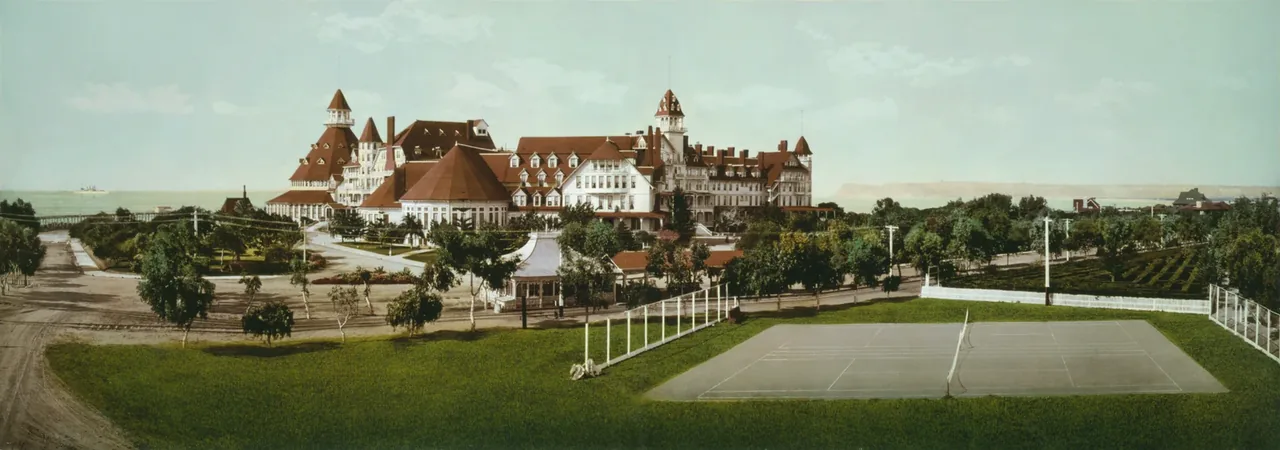
Hotel del Coronado (Kate Morgan legend)
⌖ Coronado, California
Hotel del Coronado is a surviving Victorian beach resort designed by James and Merritt Reid and completed in 1888. Its wooden Queen Anne architecture has endured successive alterations and restorations. California's Office of Historic Preservation records its state landmark designation in 1970, National Register listing in 1971 and National Historic Landmark designation in 1977. State history. The hotel celebrates February 19, 1888 as its birthday because that was the first meal served in the main dining room; its own history notes that guests had already begun arriving in January. The same account identifies Kate Morgan as the guest who registered under the name Lottie A. Bernard and died at the hotel on November 29, 1892. It reports the county coroner's finding that her fatal injury was self-inflicted. Hotel history. The building's story is also one of preservation. An extensive restoration reconstructed the original entrance veranda and recovered historic details, earning SOHO's 2022 Preservation Project of the Year award. Today it remains an operating resort that welcomes day visitors, with guest-room areas restricted to overnight guests. Restoration · Visitor policy.
Open case file →Anza-Borrego / Carrizo Gorge
Goat Canyon Trestle (Carrizo Gorge railway)
⌖ Anza-Borrego Desert / Carrizo Gorge, California
Goat Canyon Trestle is a monumental wooden railway bridge built in the early 1930s to carry trains around a collapsed tunnel in Carrizo Gorge. The San Diego History Center and Los Angeles Times describe it as approximately 630 feet long and 186 feet high, among the largest wooden trestles rather than a securely established world record. Its scale reflects the difficulty of maintaining the railway that connected San Diego with the Imperial Valley through Mexico after completion in 1919. Floods, fires, rockslides and tunnel failures repeatedly interrupted that connection. The trestle’s later story is not simply one of abandonment. MTS acquired the railway in 1979. Its April 2013 fact sheet records an October 2008 freight embargo pending bridge and tunnel repairs. Rehabilitation proposals followed, but Voice of San Diego reported in 2021 that MTS had ended Baja Rail’s lease. Those dated records do not establish present freight operations. This is restricted railway infrastructure, not a public walking bridge. MTS currently requires permission to enter its SD&AE right-of-way. The profile identifies the historical general area only and supplies no approach, crossing or viewing route.
◯ General area onlyOpen case file →Vista
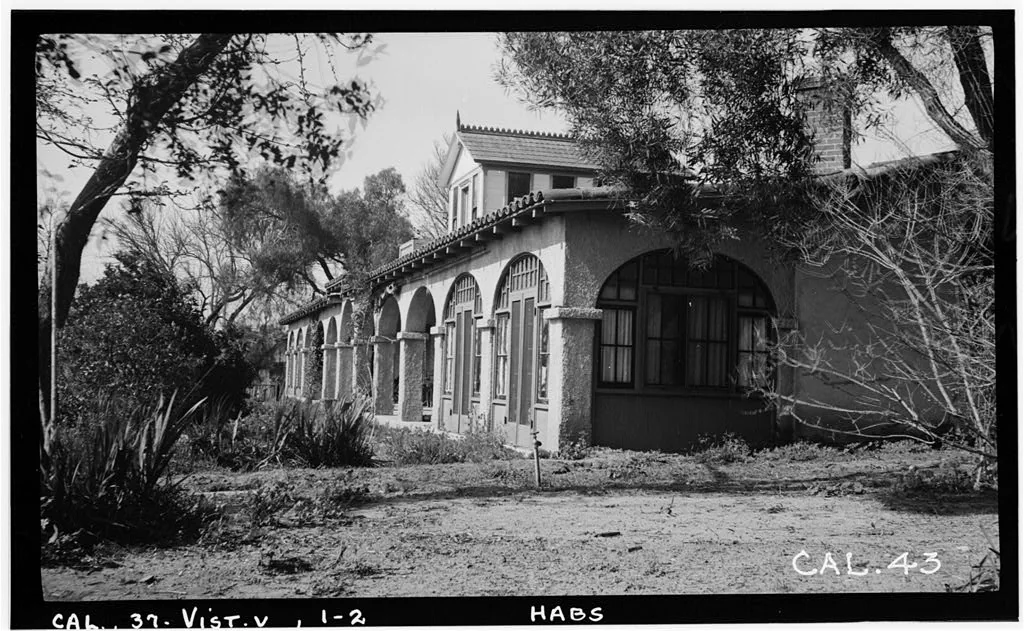
Rancho Guajome Adobe
⌖ Vista, California
Rancho Guajome Adobe preserves a hacienda built in 1852–53 on land once associated with Mission San Luis Rey. The Mexican government granted the rancho to Luiseño brothers Andrés and José Manuel in 1845. After the land passed to Abel Stearns, he gave it to Ysidora Bandini as a wedding gift when she married Cave Johnson Couts in 1851. The family moved to the ranch in 1853. Architectural history traces that transition from mission lands to a ranching household. The 28-room adobe contains two courtyards, an arcaded veranda and a chapel. Its construction and operation depended on Luiseño labor; The Cultural Landscape Foundation describes the workers as indentured. The familiar arched façade was added in the 1920s, rather than belonging to the original 1850s design. These layers make the building a record of changing architecture as well as an unequal ranching society. Recognized as a National Historic Landmark in 1970 and acquired by San Diego County in 1973, the adobe is now a public museum within a county park. The County operator offers self-guided visits during museum hours and guided tours by advance appointment. Reported hauntings belong to attributed folklore, not the documented history of the building.
Open case file →The Box That Vista Declared a Nuisance: Former Burlington, Vista
⌖ Vista, California
An 85,000-square-foot former Burlington Coat Factory store in Vista was reported to have sat empty for about six years when the Vista City Council declared it a public nuisance in August 2026. The cited reports do not confirm present vacancy, whether the building remains standing, or any later demolition.
Vacancy reported August 14, 2026. Status may change; demolition may be pending.◯ General area onlyOpen case file →Campo
Gaskill Brothers Stone Store, Campo (1875 border raid history)
⌖ Campo, California
On December 4, 1875, raiders led by Cruz 'Pancho' Lopez attacked the Gaskill brothers' earlier frame store and adjoining blacksmith shop at Campo. Early and later histories describe Luman Gaskill, also spelled Lumen, and his brother Silas being wounded and surviving. Guinn's 1907 biography and later local-history reporting describe a raider identified as Vasquez being killed and two captured raiders subsequently lynched. Published accounts differ about individual names, the sequence of shots and the timing and circumstances of some deaths; these details should not be treated as a settled casualty reconstruction. The gunfight occurred at the earlier frame building, not inside the surviving stone store. The sturdier replacement store dates to 1885 according to County Parks and local museum histories. California's landmark record describes restoration as a museum in 1943–1948 and registration on November 15, 1948. The surviving building now operates as the Campo Stone Store Museum.
◯ General area onlyOpen case file →Camp Lockett site
⌖ Campo, California
Completed in December 1941, Camp Lockett in Campo was a cavalry post that housed the 10th and 28th Cavalry. African American mounted cavalry troops served here before their departure in 1944. That year, the camp was converted to a hospital, which operated until 1946. In 1950, former hospital buildings became Rancho Del Campo, later known as the Juvenile Ranch Facility. This reuse connected the former military post to a new chapter as a county juvenile facility. The ranch operated until August 2015, when it closed.
◯ General area onlyOpen case file →Santee
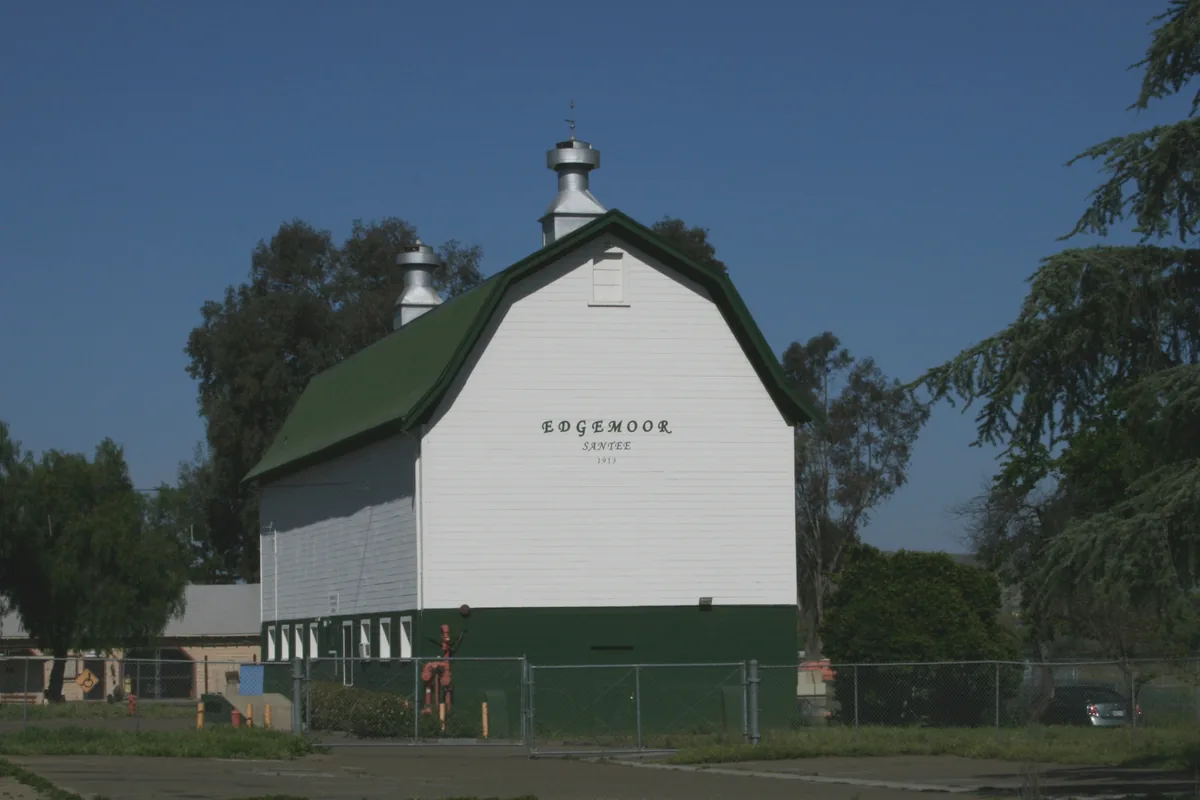
Edgemoor Farm Dairy Barn, Santee
⌖ Santee, California
Edgemoor's tall, Dutch gambrel-roofed barn preserves a chapter of Santee's agricultural history that later became entwined with county welfare and medical care. Built in 1913 for Walter Dupee's prize dairy breeding bulls, it is commonly called the Polo Barn, although the National Register nomination places the pony stables elsewhere on the farm. The nomination identifies agriculture and architecture as the building's historical significance. National Register nomination. San Diego County bought the farm in 1923 for a home serving aged and indigent people. Residents and workers tended its crops and livestock. Farming ended in 1953, and the institution became Edgemoor Geriatric Hospital in 1955; the barn served as storage rather than hospital wards. SOHO history; National Register nomination. The barn was registered on May 16, 1985, not 1986. Today the Santee Historical Society presents local-history exhibits inside it, with limited opening days rather than unrestricted access. This is a museum in a historic agricultural building, not an abandoned hospital open for exploration. State register; museum operator; visitor information.
Open case file →The County's Last Resort: Edgemoor Poor Farm, Santee
⌖ Santee, California
A big dairy barn in Santee is all that's left of San Diego County's poor farm, the "last resort" home for the county's aged and destitute in the years before Social Security. Walter Dupee built a prize-winning dairy here, and the barn dates to 1913. In 1923 the County bought the property as a "last resort" home for the aged and indigent, one of the poor farms established before Social Security. By the mid-1920s it cared for about 520 people. In 1955 it became Edgemoor Geriatric Hospital. Most of the institutional buildings were later demolished, and a new Edgemoor facility replaced the old hospital in 2009 (secondary source). The 1913 barn survives, was listed on the National Register (nomination entered 1985), and now houses the Santee Historical Society's museum.
Open case file →Warner Springs area
Kimble-Wilson adobe store, Warner Ranch
⌖ Warner Springs area, California
The Kimble-Wilson adobe store served as a wayside stop on Warner Ranch. Cyrus Kimble probably built it in 1862, according to Save Our Heritage Organisation’s history. The adobe is also described as a distinct historic store in the federal nomination for Warner’s Ranch. In 1865, Kimble and George Williams were killed at a Santa Ana River camp while traveling to Wilmington with their wives and babies. Sergeant George Cooke found the men dead and recounted the attack as described by their widows. Henry Wilson took over the store in 1866.
◯ General area onlyOpen case file →Warner's Ranch trading post site
⌖ Warner Springs area, California
Established in 1849, Warner's trading post was destroyed during the Garra uprising of 1851. The uprising unfolded amid disputes over taxation and encroachment. At Warner's ranch, buildings were burned, the store was looted and livestock were taken. The Historic American Buildings Survey and Stephen R. Van Wormer and Susan D. Walter's 2011 archaeological study date the attack to November 22 and record one member of Warner's party killed. SOHO's exhibit gives a different account: November 21, with two employees killed. Accounts from 1852 and 1853 describe ruins. Warner's destroyed house-and-store site was distinct from the surviving Warner-Carrillo adobe, a distinction clarified by the 2011 archaeological study.
◯ General area onlyOpen case file →Jacumba Hot Springs area
Jacumba Valley massacre site
⌖ Jacumba Hot Springs area, California
In February 1880, cattlemen pursued people accused of taking cattle in the Jacumba area. The San Diego Union's February 28 report described a McCain boy being killed, the pursuers retreating, and a military response. Mike Connolly's history identifies William McCain as the son of George McCain. William's death became part of conflicting accounts of what is remembered as the Jacumba Massacre. In a 1991 Calexico Chronicle article, Peter R. Odens reported that William's gravestone recorded February 27, 1880, and an age of 17. The inherited accounts he recorded disagree about the sequence of attack and retaliation.
◯ General area onlyOpen case file →Julian
Bush and Ivey shooting, Julian area
⌖ Julian, California
The shooting of John Ivey in the Julian area of San Diego County led to a murder case against J. J. Bush. In 1884, the California Supreme Court reversed Bush’s murder conviction over improper evidence and an erroneous self-defense instruction. A later trial resulted in a first-degree murder conviction. The jury had visited the shooting site in 1884 without Bush present. In 1886, the California Supreme Court reversed the conviction and ordered a new trial because that visit had taken place in his absence.
◯ General area onlyOpen case file →Gold, Debt and Silence: Stonewall Mine and Cuyamaca City
⌖ Julian, California
High in the Cuyamaca Mountains, cut-stone foundations and scattered machinery mark where a 19th-century gold mine and its company town once stood. Gold was discovered here in 1870, and the Stonewall Mine was worked until 1892, when debt and foreclosure ended operations. Workers lived in Cuyamaca City, a small town with cottages, a store, a post office, a school and a boarding house. The mine closed in 1892. Today collapsed pits, foundations, tailings and scattered machinery remain. Interpretive ruins inside Cuyamaca Rancho State Park, with ongoing archaeological study by California State Parks.
◯ General area onlyOpen case file →Moosa Canyon
Moosa Canyon ranch gunfight site
⌖ Moosa Canyon, California
On January 18, 1888, an attempted eviction at Stone's bee ranch in Moosa Canyon ended in a gunfight. A posse led by Breedlove was involved in the confrontation, which left four people dead. Burnham, Going and McCarnahan/McConahay died that day, according to county coroner records. Reed also died in connection with the gunfight, although accounts differ on when. The sheriff asked artist Isaac Jenkinson Frazee to sketch the scene.
◯ General area onlyOpen case file →Mesa Grande
Mesa Grande mountainside posse shootout
⌖ Mesa Grande, California
In September 1895, a posse pursued Ysidro Renterias after he wounded Ramon Arisa on September 6. Constable Hubbert and deputized citizen Juan Castro took part in the pursuit, which the Oceanside Blade described as lasting nine days. It ended in a confrontation at Mesa Grande, where Castro and Renterias died. The Blade’s narrative places the confrontation on a Saturday. Robert Bowling’s 2022 account instead dates it to Sunday, September 15, and describes a pursuit of nearly ten days. Both accounts tell of Castro’s death during the effort to capture Renterias. The Blade reported that an inquest the following day justified Hubbert’s actions. Both the Blade and the San Francisco Call credited him with killing Renterias. Bowling’s later account gives a different interpretation: it reports that the inquest found Hubbert’s bullet had not killed Renterias and infers simultaneous shots involving Castro.
◯ General area onlyOpen case file →San Ysidro
Otay Valley flood zone, Lower Otay Dam failure
⌖ San Ysidro, California
On January 27, 1916, Lower Otay Dam was overtopped during the Southern California floods. Its steel diaphragm failed at 5:05 p.m., sending floodwater downstream into the Otay Valley and affecting Palm City. The disaster killed at least 20 people in the Otay Valley, according to the San Diego History Center. Japanese residents were among the victims; the South Bay Historical Society reproduces an account of eleven Japanese victims who were memorialized. Eight officers and 85 enlisted Navy and Marine personnel took part in a two-week relief effort. Their service district included San Ysidro and the Tijuana border area, extending the response beyond the Otay Valley itself.
◯ General area onlyOpen case file →National City
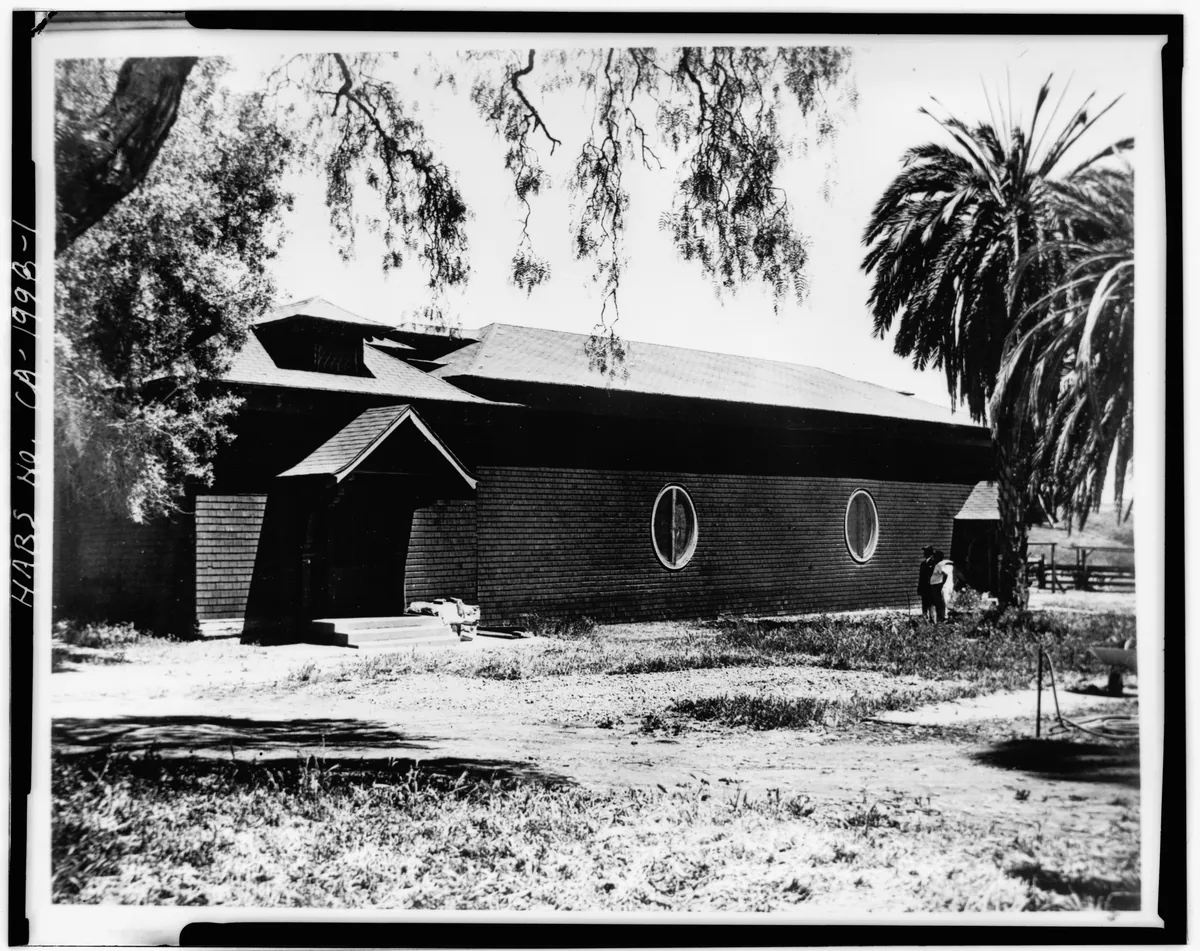
The Silent Concert Hall: Granger Music Hall, National City
⌖ National City, California
A small redwood concert hall where some of the world's great violinists once played sits boarded up behind a fence on East 4th Street. It is one of the rarest surviving works of architect Irving J. Gill, and it has been silent since 2008. Colorado silver magnate Ralph Granger had the hall built in 1898 at his National City estate, to a design by the young Irving J. Gill. It housed his violin collection and hosted private concerts. Granger later expanded it into an 80-by-30-foot auditorium with a 75-foot ceiling mural of Euterpe, the muse of music, and a Murray Harris pipe organ behind a carved cedar screen. Pianist Mark Hambourg, violinist Alexander Petschnikoff and Eugène Ysaÿe performed there. The Granger estate burned in 1906. In 1969 the land was sold for apartments, and the National City Historical Society moved the hall in two sections to East 4th Street, on City land leased for $1 a year. The hall was listed on the National Register of Historic Places in 1975. After 39 years of weddings, quinceañeras and community events, the hall closed in 2008 when roof repairs were needed. A City plan to buy it for $10 and move it to the Port never went ahead, and the hall has stayed closed since (NCHS). SOHO's 2026 Most Endangered list describes it as "vacant, boarded up, fenced off, and deteriorating." SOHO inspected it and prepared a condition assessment in 2025. NCHS is petitioning the City for a lease to restore it in place.
◯ General area onlyOpen case file →Poway
Boulders and Honky-Tonk: Big Stone Lodge, Poway
⌖ Poway, California
Granite boulders the size of cars and enormous timber beams make up a 1920s roadside resort that served Poway as a dance hall, restaurant and country-western bar for decades. It has stood empty for more than 20 years. After the Poway–Escondido stagecoach line stopped running, Dr. Homer Hansen and Daniel Stuck bought land along Old Pomerado Road in the 1920s and planned a resort in an oak grove. A gas station opened in 1925, followed by the Big Stone Lodge with its dance hall and bandstand, and a restaurant and bar around 1930. The buildings use huge granite boulders, thought to come from nearby hillsides, and gigantic roof beams. The full resort was never built, but the lodge was a popular roadside stop and local social center for decades. The lodge declined after Old Pomerado Road / Highway 395 was straightened in the 1990s, which hid it from passing traffic. By then it had a reputation as a rowdy country-western bar. Noise complaints from a new subdivision preceded its closure. Poway's Redevelopment Agency bought the property in 2003, and a 2005 historical evaluation recommended treating it as a historic district (SOHO). City-owned and deteriorating. In 2019 city officials said squatters regularly broke in and called the property a nuisance (10News). On Sept 15, 2026 the City Council voted unanimously to remove the parcel from its affordable-housing inventory and prepare it for a future passive park.
◯ General area onlyOpen case file →Oceanside
The Day the Playground Fell In: Garrison Elementary, Oceanside
⌖ Oceanside, California
Behind a fence on Garrison Street, the classroom buildings of a former elementary school wait out their last years. For half a century this was E. G. Garrison Elementary. Then, in the winter of 2019, the ground behind the school opened up. The campus was planned in 1966 as "Loma Alta Elementary" and designed by architect Samuel Wood Hamill, FAIA. Construction began in September 1969, and the school opened in 1970 under a new name honoring Elra G. Garrison, a longtime district business official. Portable classrooms were added in 1985, 1990 and 2016. In February 2019 a sinkhole opened at the rear of the campus. A second appeared on the blacktop in May. Engineers traced them to a failing storm-drain system and estimated about $13 million for repairs. Students were moved out in August 2019. In April 2020 the school board voted 4–1 to close Garrison permanently, and it was declared surplus that June. City and state environmental documents from 2025 describe the site as "ten abandoned school structures." The Planning Commission approved a 140-townhome project 5–0 in August 2025, and the City Council approved it on December 3, 2025. Construction is expected to begin around 2027. A 2024 historical report found the campus not eligible for the California or local historic registers. Its condition since August 2025 has not been verified.
◯ General area onlyOpen case file →Chula Vista
Twenty Years in the Dark: The Vogue Theatre, Chula Vista
⌖ Chula Vista, California
For six decades the neon of the Vogue marked downtown Chula Vista's night out: first dates, family movie nights and dollar Tuesdays. The doors closed in 2006, and the theater has sat dark on Third Avenue ever since. The Vogue opened on January 19, 1945. It was a poured-concrete, single-screen theater designed by architect Frank Hope Jr. It became a South Bay gathering place, known for cheap triple features and low-cost promotions. The City designated it a historical resource in 2011. The Vogue closed in July 2006. Its final triple feature reportedly drew fewer than 50 moviegoers. Several later revival plans, including a 2019 concert-venue conversion, stalled and never opened. Vacant for about 20 years. In May 2026 the City of Chula Vista announced it had acquired the theater and the adjacent parking lot through a settlement with the former owner. The long-term vision is a performance venue.
◯ General area onlyOpen case file →Mount Laguna
The Radar Station the Forest Took Back: Mount Laguna Air Force Station
⌖ Mount Laguna, California
For decades a Cold War radar base watched the skies from the Laguna Mountains. After the Air Force left, its buildings slowly fell apart, until the Forest Service cleared them away. Mount Laguna Air Force Station was an Air Defense Command radar station. The U.S. Air Force stopped operating it in 1981. The Forest Service later described the abandoned buildings as severely deteriorated and vandalized, with asbestos and collapse hazards, and evidence that transients were living there. On July 8, 2009 the Descanso Ranger District signed a decision to remove the buildings and hazardous materials and restore the landscape. The Forest Service lists the project as completed.
◯ General area onlyOpen case file →Carlsbad
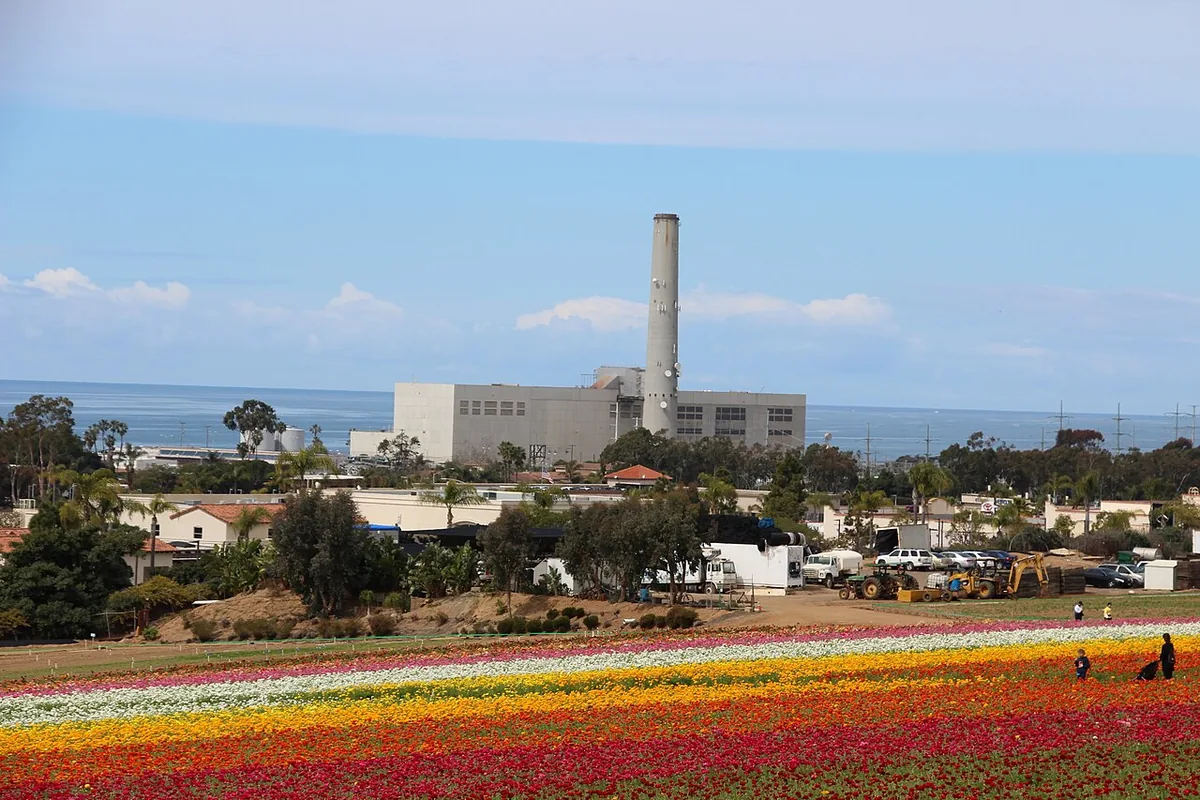
The Stack Comes Down: Encina Power Station, Carlsbad
⌖ Carlsbad, California
For decades a 400-foot smokestack was the landmark of the Carlsbad coast. Now the old power plant is gone. The Encina Power Station was a fossil-fuel plant on Agua Hedionda Lagoon. It was retired on December 11, 2018, after a smaller replacement plant was approved. According to the City of Carlsbad, NRG substantially completed demolition of the old plant in 2022, with final completion in 2025. The land is privately owned by Cabrillo Power I LLC (an NRG subsidiary). The City's General Plan calls for open space and visitor-serving commercial uses there.
◯ General area onlyOpen case file →Where the Dragsters Ran: Carlsbad Raceway
⌖ Carlsbad, California
For forty years the roar of dragsters and motocross bikes echoed across the hills east of Carlsbad. Today the site is a business park. Larry Grismer and Sandy Belond bought the land in 1961 and opened Carlsbad Raceway in 1964, with a quarter-mile dragstrip and a motocross track. The land was sold in 1986, and the raceway continued on a month-to-month lease. Motorsports ended in August 2004 when the owners decided to develop the land. The Carlsbad Raceway Business Park was built at the northeast corner of Palomar Airport Road and Melrose Drive.
◯ General area onlyOpen case file →Encinitas
Twenty Years Empty, Then Art: Pacific View, Encinitas
⌖ Encinitas, California
A mid-century schoolhouse on the bluffs above Moonlight Beach sat empty for two decades before the city brought it back as an arts center. The first parcel of the site was deeded to the Encinitas School District in 1883, and Encinitas' original schoolhouse stood here until 1927. Pacific View School was built and dedicated in 1953 in a mid-century modern style. The school closed in 2003 because of declining enrollment and aging buildings. The City bought the property from the Encinitas Union School District in 2014. After a decade-long effort, the rehabilitated campus opened as the Pacific View Arts Center on August 6, 2024.
Open case file →Escondido
The Empty Offices in Escondido
⌖ Escondido, California
In Escondido, a former office building was reported vacant in December 2025, when a 70-townhome replacement project received City Council approval. An August 2026 sale report followed. The supplied sources do not establish later vacancy, whether the building remains standing, or demolition timing.
Vacancy reported August 28, 2026. Status may change; demolition may be pending.◯ General area onlyOpen case file →