
Haunted & Dark-History Places in Los Angeles County
Los Angeles County’s profiles separate financial tragedy, unresolved deaths and attributed ghost stories. In City of Industry, Workman House began as an adobe in 1842. The Temple and Workman bank closed in 1876, and William Workman died by suicide that May. Contemporary explanations of his motives remain interpretations.
Agoura Hills’ Reyes Adobe dates to about 1850. The Acorn later published Richard Senate’s account of a bandit killed and buried there, but supplied no documentary evidence of that alleged event. The haunting story is an attributed legend, not an established killing.
At Santa Clarita’s Newhall Ranch House, Margaret Routledge died from a gunshot wound in 1916. Her death record could not determine suicide or accident; a newspaper’s murder theory remained unproven. Preservationists moved the house to Heritage Junction in two sections in 1990.
In Los Angeles, Hollywood Forever’s history includes its refusal to bury Hattie McDaniel in 1952 under a racially discriminatory policy. The cenotaph dedicated in 1999 commemorates that exclusion; it is not her grave.
Los Angeles
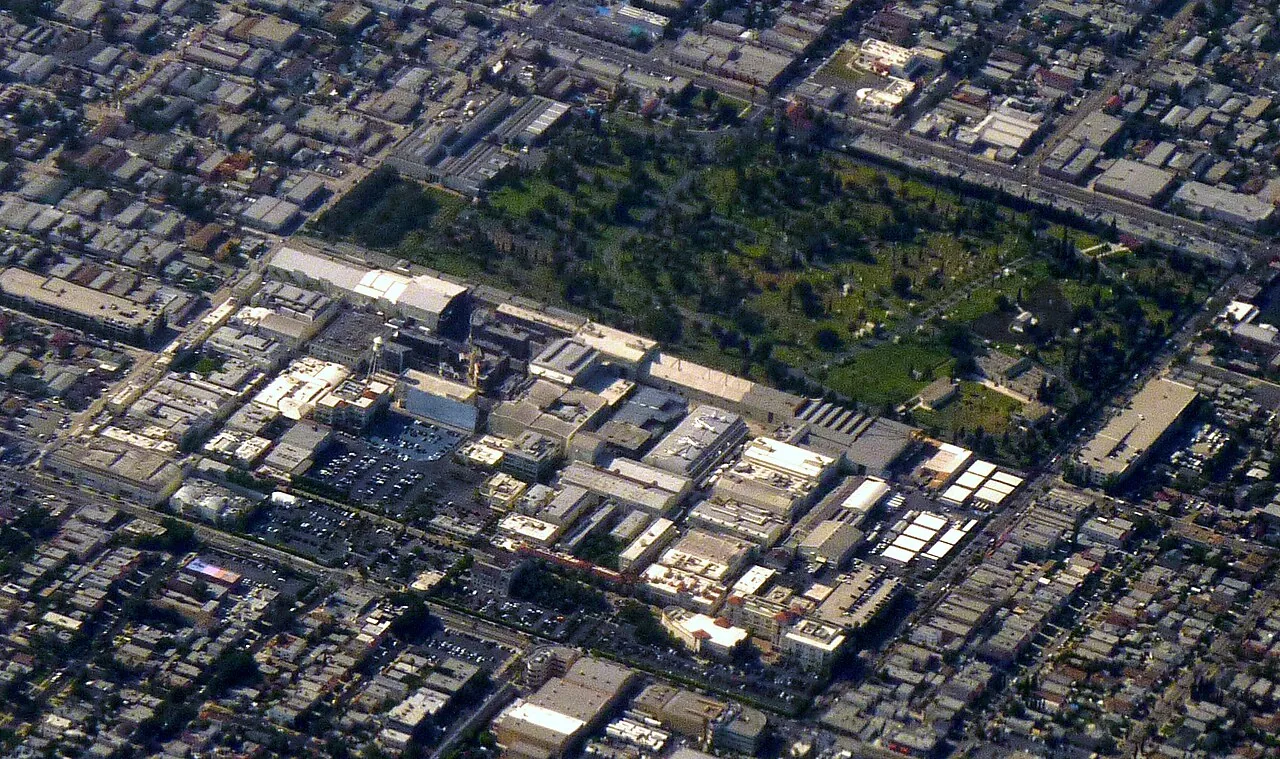
Hollywood Forever Cemetery
Los Angeles, California
Founded in 1899, Hollywood Forever preserves the history of Hollywood in a cemetery that still serves its surrounding community. Paramount Studios occupies the undeveloped southern portion of the original cemetery site, tying the landscape directly to the growth of the film industry. Its lawn-park design, associated with cemetery planner Joseph Earnshaw, and its chapels and mausoleums make the grounds significant beyond their famous names. The cemetery declined during the late twentieth century and faced bankruptcy in 1998. New ownership that year began a restoration and adopted the Hollywood Forever name. National Register recognition followed in 1999; Los Angeles designated the property a Historic-Cultural Monument in 2022. Today its cultural life includes film screenings, concerts and Día de los Muertos celebrations. A memorial also records an exclusion the cemetery once enforced. Hattie McDaniel was refused burial here in 1952 because of a racially discriminatory policy; a cenotaph was dedicated in her honor in 1999. It is not her grave. Actual interments include Judy Garland, Cecil B. DeMille, Rudolph Valentino, Douglas Fairbanks and Dee Dee Ramone. Johnny Ramone's prominent monument should likewise be distinguished from a verified burial. This is a working cemetery, not an abandoned site.
Open case file →McKinley Mansion, Los Angeles
⌖ Los Angeles, California
Built in the 1910s, Los Angeles's McKinley Mansion had 20 rooms and 13,000 square feet of space. Maytor H. McKinley purchased the house in 1945. The city designated it a Historic-Cultural Monument on September 9, 1987. An aborted demolition attempt followed in 1988, according to contemporary Los Angeles Times reporting. On May 23, 1994, fire destroyed the mansion. Two people were found dead, one on the second floor and another in the attic. Their identities, the causes of their deaths and the cause of the fire were not immediately determined. By 1995, neighborhood groups were proposing a community center, housing and gardens for the former mansion site. These were plans, not completed projects. The Pacific Coast Architecture Database dates the final demolition to about 1995.
◯ General area onlyOpen case file →City of Industry
Workman House, Homestead Museum
⌖ City of Industry, California
The Workman House preserves the history of a California rancho family whose fortunes rose with cattle ranching and fell with banking. William Workman began the adobe home in 1842; later remodeling gave it the appearance of an English manor house, according to California’s landmark record. The house’s story reaches beyond one tragic event to the changing economy of greater Los Angeles. The Temple and Workman bank, co-owned by Workman and his son-in-law F. P. F. Temple, closed permanently on January 13, 1876. Workman died by suicide on May 17. Museum historian Paul R. Spitzzeri reconstructs the event from contemporary newspapers. Their explanations of his motives remain historical interpretations, not certainty about his private thoughts. The property did not simply disappear after the collapse. Family members retained the house and surrounding acreage into the late nineteenth century, and Walter P. Temple bought it in 1917. After later institutional uses, city acquisition and restoration, the Homestead Museum opened in 1981, as the National Park Service recounts. Today it is a public historic museum, not a private residence. The museum’s current visitor information requires guided tours for ordinary house visits.
Open case file →Agoura Hills
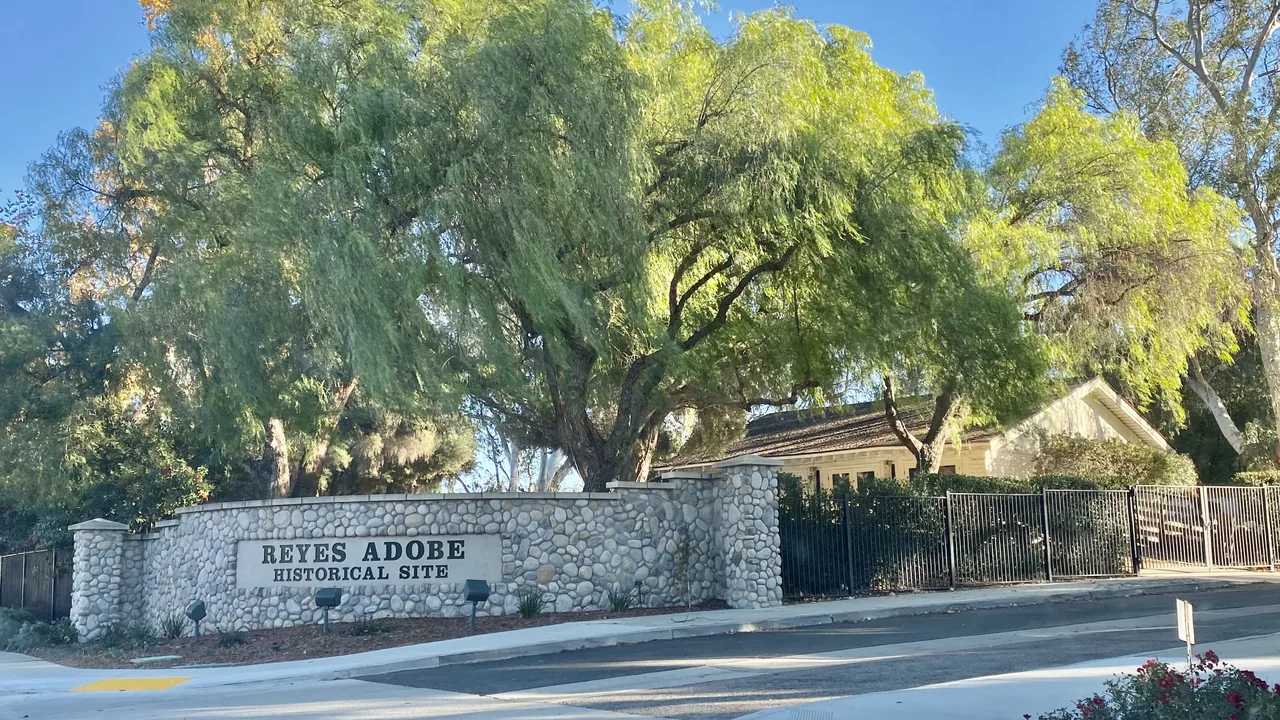
Reyes Adobe Historical Site, Agoura Hills
⌖ Agoura Hills, California
Reyes Adobe preserves a family home from California’s rancho era inside a city-run historical site. The City of Agoura Hills dates its construction to about 1850 and credits Jose Paulino Reyes. His mother, Maria Antonia Machado, had purchased Rancho Las Virgenes in 1845. Today, furnished rooms interpret different periods of the family’s life, while the former barn displays artifacts, photographs and the property’s history. City history · Museum interpretation The building survived successive owners and repeated preservation campaigns. Malcolm McKenzie repaired it after buying the property in 1935. The city acquired the site in 1983, but earthquake damage in 1994 delayed plans to open it. A later rehabilitation culminated in the public opening on October 16, 2004. These changes make the adobe a record of both nineteenth-century domestic life and twentieth-century efforts to preserve it. The Acorn · Contemporary earthquake report · City chronology The city currently offers self-guided tours on limited opening dates. Its museum access should not be confused with unrestricted entry to a former home. Official visitor information
Open case file →Santa Clarita
Newhall Ranch House, Heritage Junction
⌖ Santa Clarita, California
The Newhall Ranch House survives at Heritage Junction in William S. Hart Park, but its history began elsewhere. The historical society describes a small predecessor traditionally associated with Thomas R. Bard's 1865 purchase of Rancho San Francisco; the surviving Victorian house took its larger form in the 1890s. Its earliest construction date is uncertain. It became a home for the ranch foreman and accommodated visiting company officials until 1973. Operator history Margaret Routledge, wife of the ranch manager, died there on January 24, 1916. The local archive reproduces a death record that could not determine whether the shooting was suicide or accidental. An unidentified contemporary newspaper also discussed murder as a possibility, without establishing it. These records document an unresolved death, not a proven homicide or a supernatural explanation. Archived records In August 1990, preservationists moved the house to Heritage Junction in two sections over two nights. Contemporary reporting describes the building arriving safely after a narrow bridge interrupted the move. That rescue, independently reported by the Los Angeles Times, is an important part of the house's story alongside the later ghost folklore. Contemporary report
Open case file →